
Top 10 Gems I’ve played in the first half of 2021
August 16, 2021
This article is basically my way to keep track of the things that I’m playing recently. It’s also a good way for me to practice my English writing and to give a second thought to games that I’ve played and loved. Here’s my Top 10 (and a few extras at the end) from the first half of 2021. Enjoy!
10. Annalynn
While Shovel Knight did an amazing job gathering the whole NES catalog into a single game design, Annalynn does something very similar to arcade games like Donkey Kong or Pac-Man, where the design is all around the best High-scores and leaderboards. I’m usually not attracted to games that focus solely on repeating and mastering, but I’m learning from time to time with games such as Horizon Chase, Devil Dagger, Mini Motorways, and Annalynn that I do enjoy this a lot, and I had a blast playing Annalynn.
Annalynn Steam Link Here
There’s something very intriguing in playing a difficult game over and over in order to achieve better high scores, especially if the game has depth as Annalynn has. From snakes that follow you with smart patterns like the ghosts in Pac-man, with different mechanics that add depth to each chapter, such as ropes (inspired by classic DK ropes), treadmills, slippery ice, and even flame throwers. Your goal in each level is always the same, collect all round pills to go to the next level, much like in Pac-Man. You have only 3 lives, but you can farm enough score to achieve a few extra ones to help you out, which you’ll need since everything is 1-hit-KO. Get your pickaxe, collect your pills, eat some breakfast and avoid snakes, what else do you want?
The art is great, the soundtrack is amazing, the levels are creative but simple as they should be. If you’re looking for a score-based game to challenge yourself, go check out Annalynn, it’s great! Also, check out this music to convince yourself to go play right now!
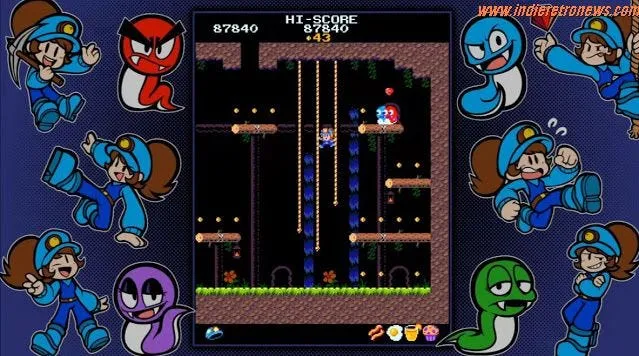
My Highscore was 136240 on a single run (without using any continues) if anyone is out there to compete!
9. Kaze and the Wild Masks
Kaze was a very pleasant surprise for me. I’m following the devs on Facebook and Twitter since the very beginning of the development, and boy, the game improved consistently. The game was already great one or two years ago, but they were able to improve a lot of it, making it one of the best spiritual successors of old-school platforms, such as Donkey Kong or Sonic.
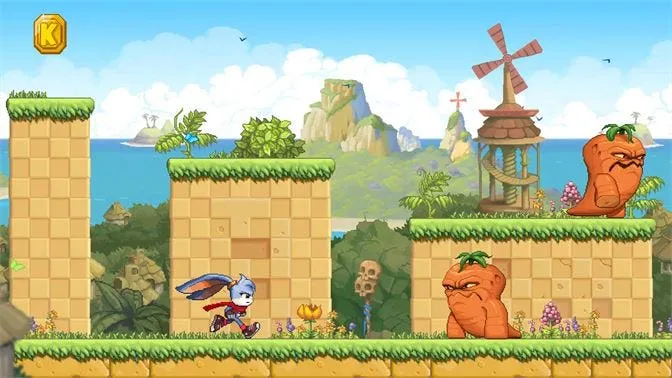
Kaze and the Wild Masks Steam Link Here
Kaze nails the level design as much as its references do. It’s elegant, tricky, and rhythmic. All hidden stuff makes you feel smart when you found it, but at the same time, they are totally fair and pretty clear for those who are paying attention. The bosses are very well designed and fun to play, especially the final and the one before it.
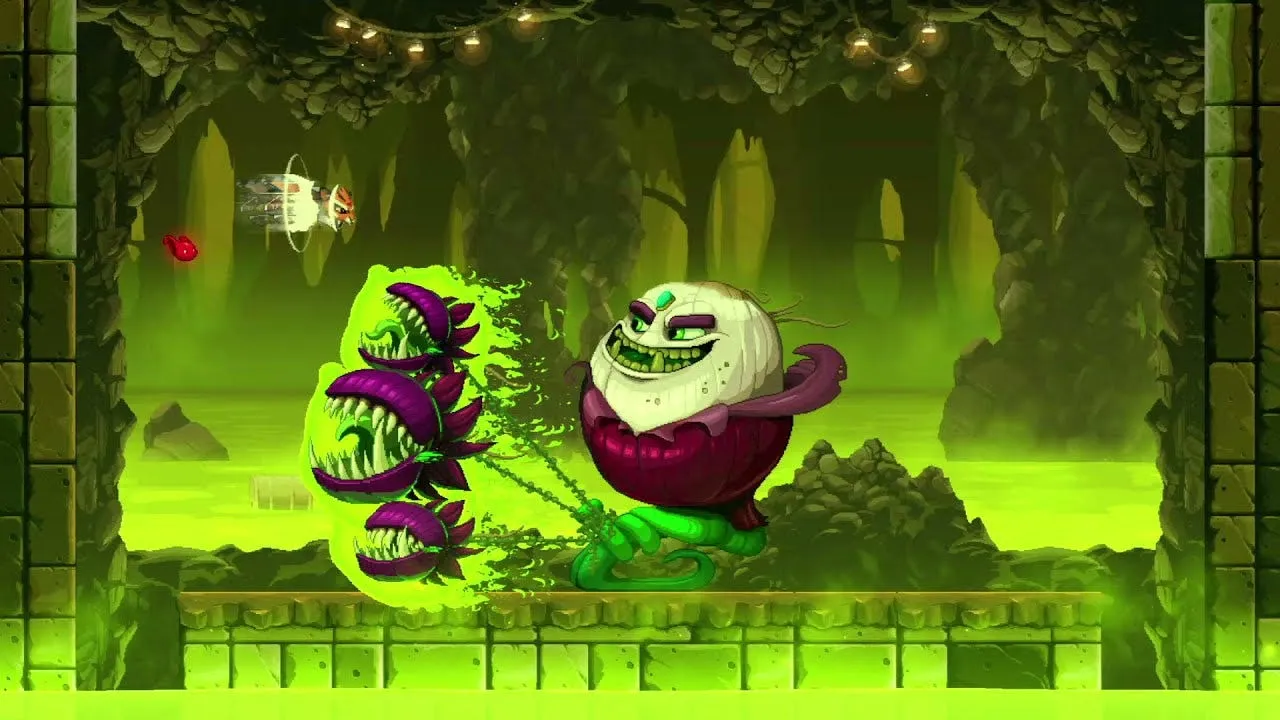
Another cool thing are the masks. Instead of having a stage like a “Donkey Kong minecart stage”, Kaze gives you a mask that changes your move set. There is a mask that makes you dash and wall-climb like Megaman X, another one that makes you run automatically (which is very close to DK minecart stage feeling), another one that makes you swim super fast, and one that makes you fly and throw projectiles. Each of those masks has enough depth to be a game on its own, but instead, they are smartly added to specific stages to break the rhythm in a super cool way.
On top of this, the art, animation, game feel, and most importantly, the sound design were top tier. I’m not a super fan of old-school sidescrollers like Mario, Sonic, or DK, but this one was so fun to play with that I couldn’t stop before finishing all achievements, and it was super worth it.

8. Resident Evil 2
A very obvious game that I should have played before, especially because I’ve played a little bit of the original one when I was a little boy afraid of everything. My friend had RE2 for the Nintendo 64 at that time, but we never got past the first licker, one reason was that it was difficult and the other one is because it was scary as hell, and as I mentioned, I was afraid of everything. Time has passed and for some reason, I developed a taste for the horror genre, to a point that I’m not afraid to play/watch anything (well, besides VR horror, that shit is intense). Everyone is saying that the RE2 remake is a blast, so here we are.
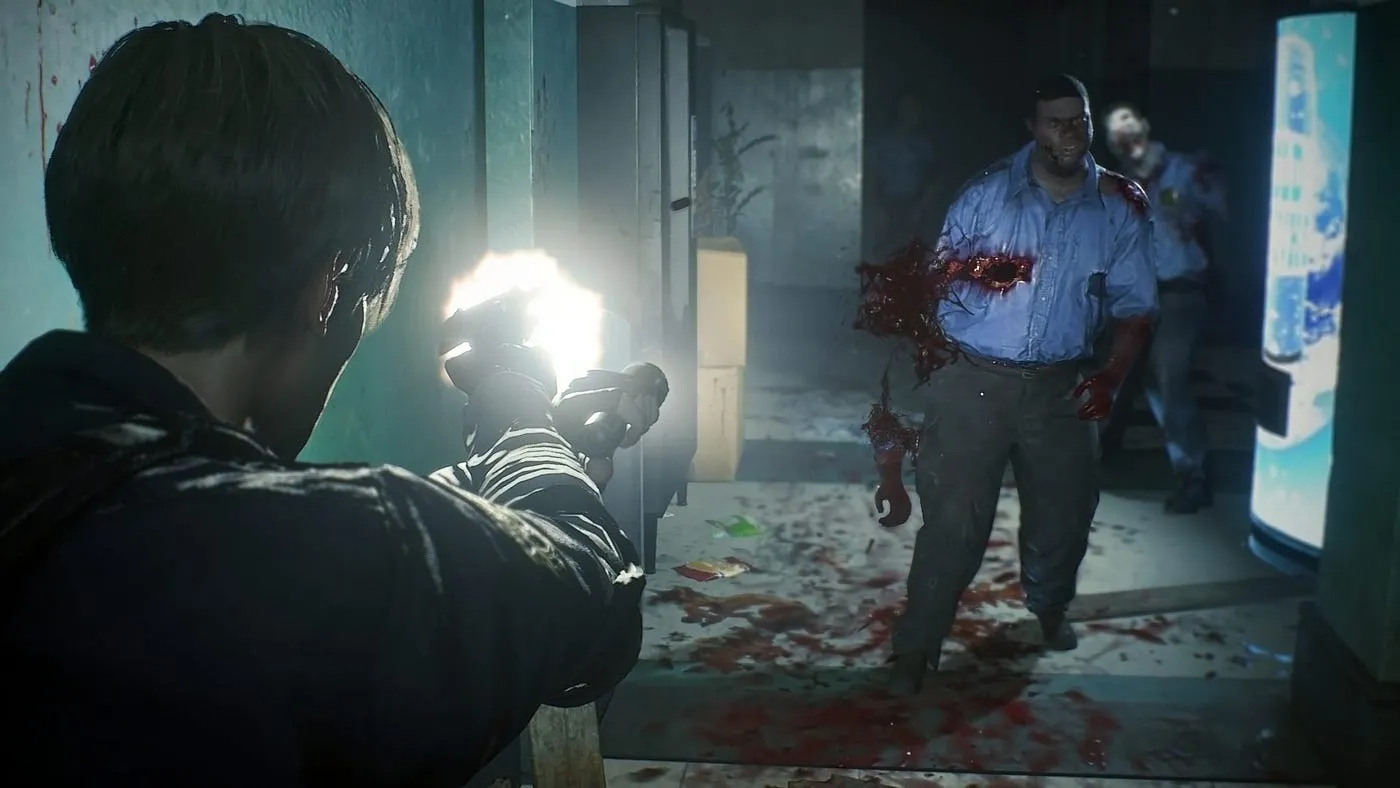
Resident Evil 2 Steam Link Here
Resident Evil 2 (2) was a fresh take on the series, and to be completely honest, I don’t think I’ll say something here that you haven’t heard before. The game is awesome and I don’t want to spoil anything, Capcom nailed it in every aspect. Related to art direction, it’s one of the most impressive games I’ve played. The mood, textures, and the feeling that every material is reflecting the light the way it should make RE 2 the perfect game for tech artists (funny enough, I’ve played streaming it for 2 friends of mine, both tech artists).
I have a few things about RE2 Remake that I didn’t LOVE, but most of them are related to the original design or related to a few specific mechanics (yea, I’m talking about the boss fight with the container). But although that I don’t love them, I still enjoyed those few bits.
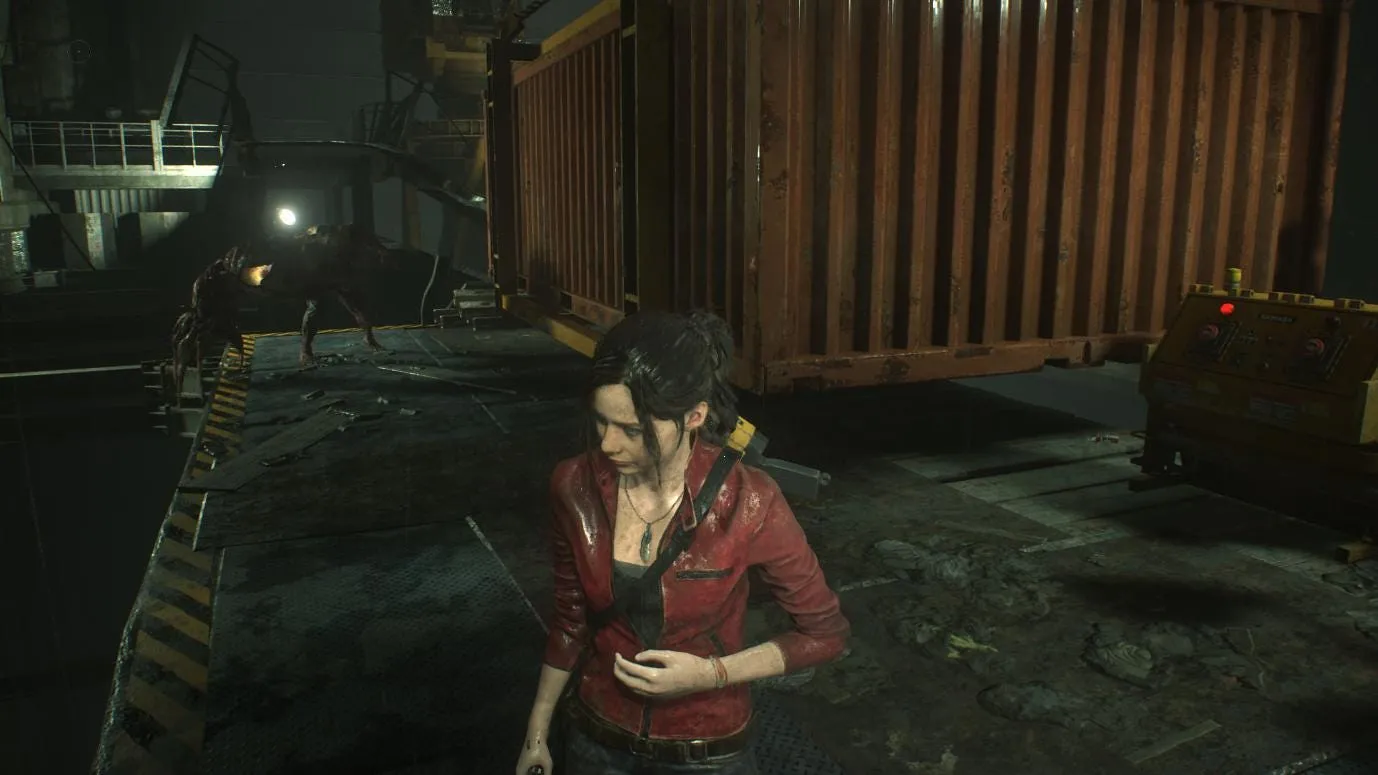
Yea, this is the boss that I’m talking about.
I’ve played Leon’s campaign and then Claire’s side-B campaign. Both were really entertaining and I recommend playing both campaigns, the events are not THAT different, but playing both feels very different, especially because you are way more confident about the map, the rooms, the item placement, and, eventually, overconfident about where the threats are, when in fact, those are slightly different from campaign to campaign. Eventually, you end up with 3 lickers in your face instead of a green herb, but that’s life, isn’t it?
7. Half-Life 2 (+ Episode 1 and Episode 2)
As you might notice from my previous article, I’m exploring the Half-Life IP finally. Half-life 2 is an excellent sequel, where the whole product evolved. For the sake of this review, I’ll focus on Level Design, which is the part that, in my opinion, shines the most. There were a few specific sections that I want to highlight here.
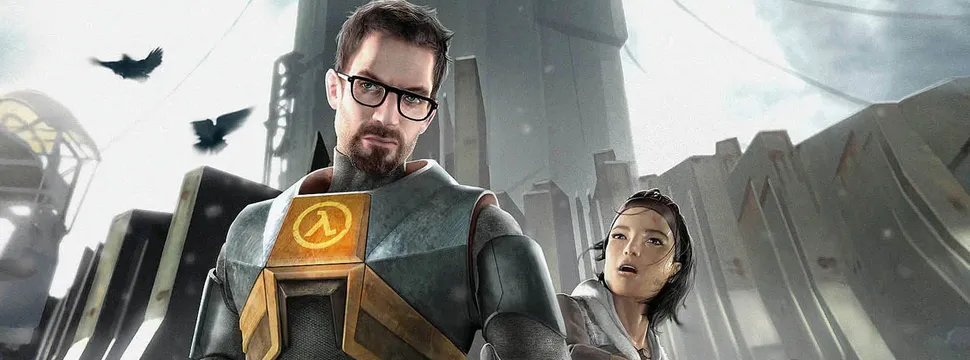
Half-Life 2 Steam Link Here | Half-Life Episode 1 Steam Link Here | Half-Life Episode 2 Steam Link Here
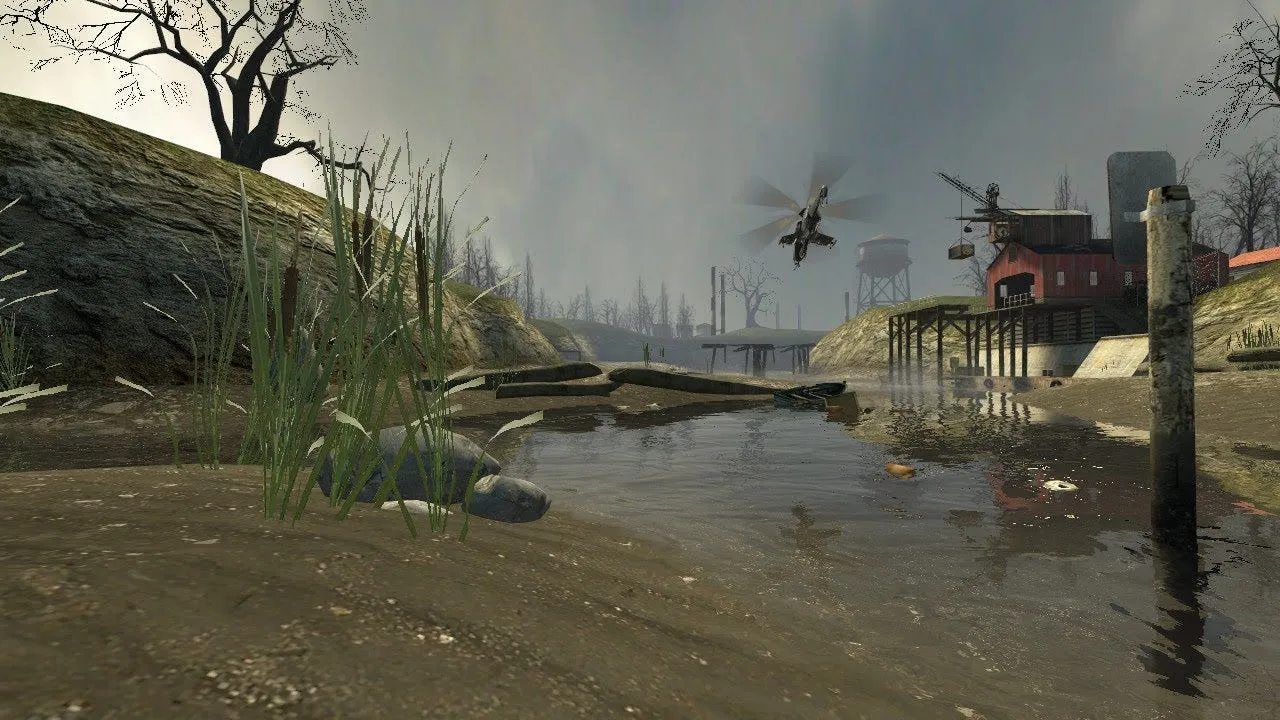
Chapter 4: Water Hazard — It’s very interesting how HL design is all around their engine technology. It’s clear that HL1 was almost like a tech demo for their physic engine (I mean, it’s THE tech demo, but still is a game that wants to show the engine potential in many moments). HL2 has this same feeling in a lot of places, and Water Hazard seems to be all about big open spaces with high-speed vehicles. It feels very different from previous level design sections, and boy, it feels fresh! Amazing section with very different gameplay.
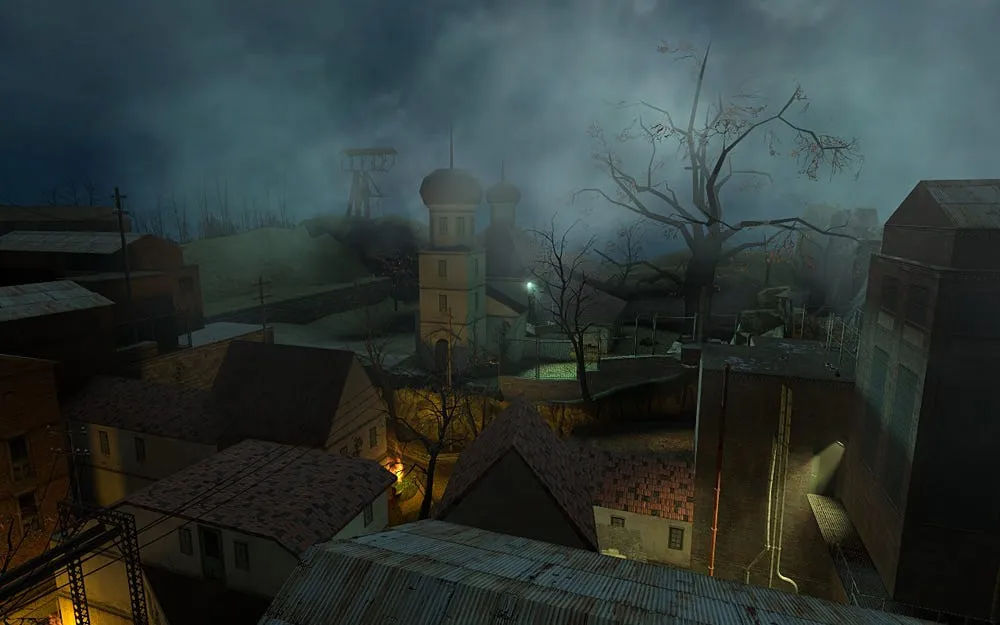
Chapter 6: We don’t go to Ravenholm — Ravenholm is a classic section that turns HL2 into a horror game for a few minutes, and, somehow, feels very interesting. This whole section is all about bizarre creatures, zombie-like enemies, and a few jumpscares. It’s really moody and makes clear that Half-Life is all about fun and videogames, it doesn’t try to follow common macro-level-design guidelines, it prefers to create experiments, innovation, and different feelings.
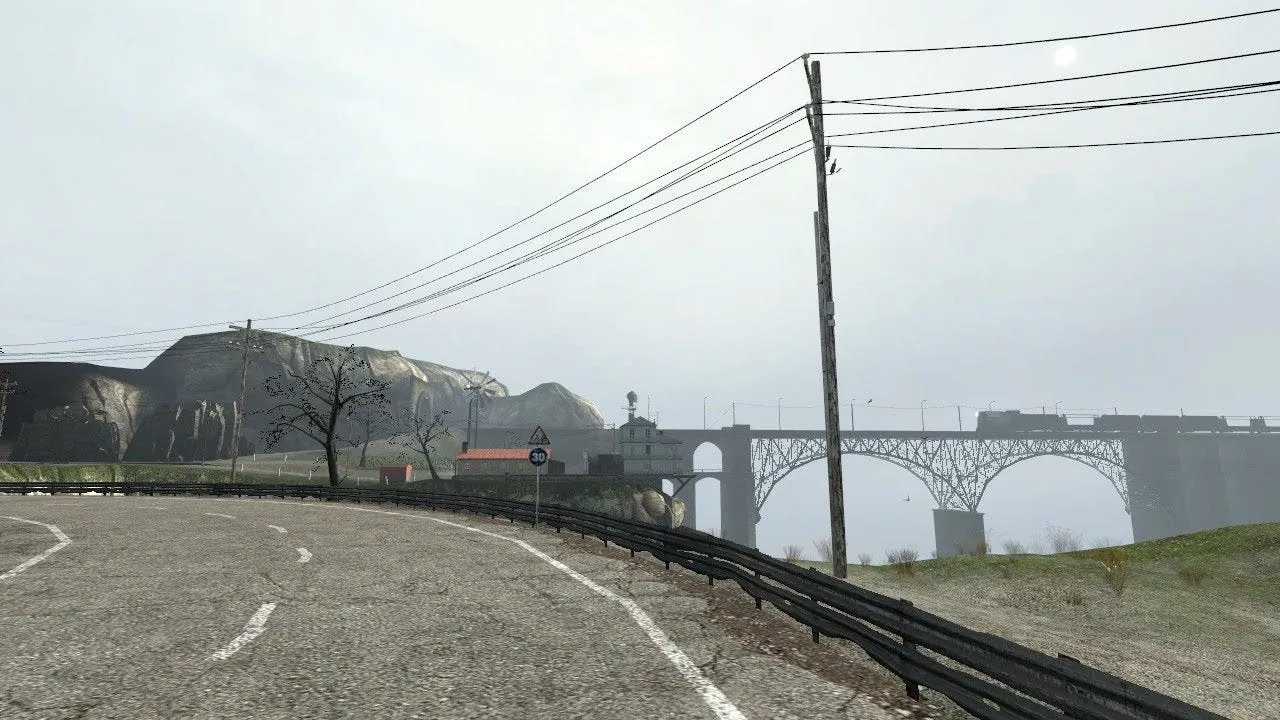
Chapter 7: Highway 17 — Much like Chapter 4, Highway 17 does the same thing with a car, but now running through a big road with small bases now and then. The section under the bridge is just awesome.
Episode 1 and 2 — Both episodes 1 and 2 feels good, but I gotta say episode 1 was a little disappointing (the pace, in my opinion, is not as good as the rest of the franchise. It also feels repetitive and the story doesn’t evolve too much). Episode 2 is all about the narrative (more than the gameplay, comparing to HL2). It’s still a very enjoyable experience and probably felt better for people who waited for their release (I’ve played everything in the same week, and at the end, I was a bit exhausted of Half-Life).
The only thing I’ve didn’t enjoyed was how Gordon was highlighted on HL2 compared to HL1. HL1 was all about letting Gordon be the silent hero with other NPC’s that felt like figurants. On the other hand, HL2 adds a bunch of important NPC’s, big dialogue sections, and a giant drama around Gordon’s actions. I’m not saying this is bad, but I’ve enjoyed how HL1 was subtle with their narrative.
6. Sekiro: Shadows Die Twice
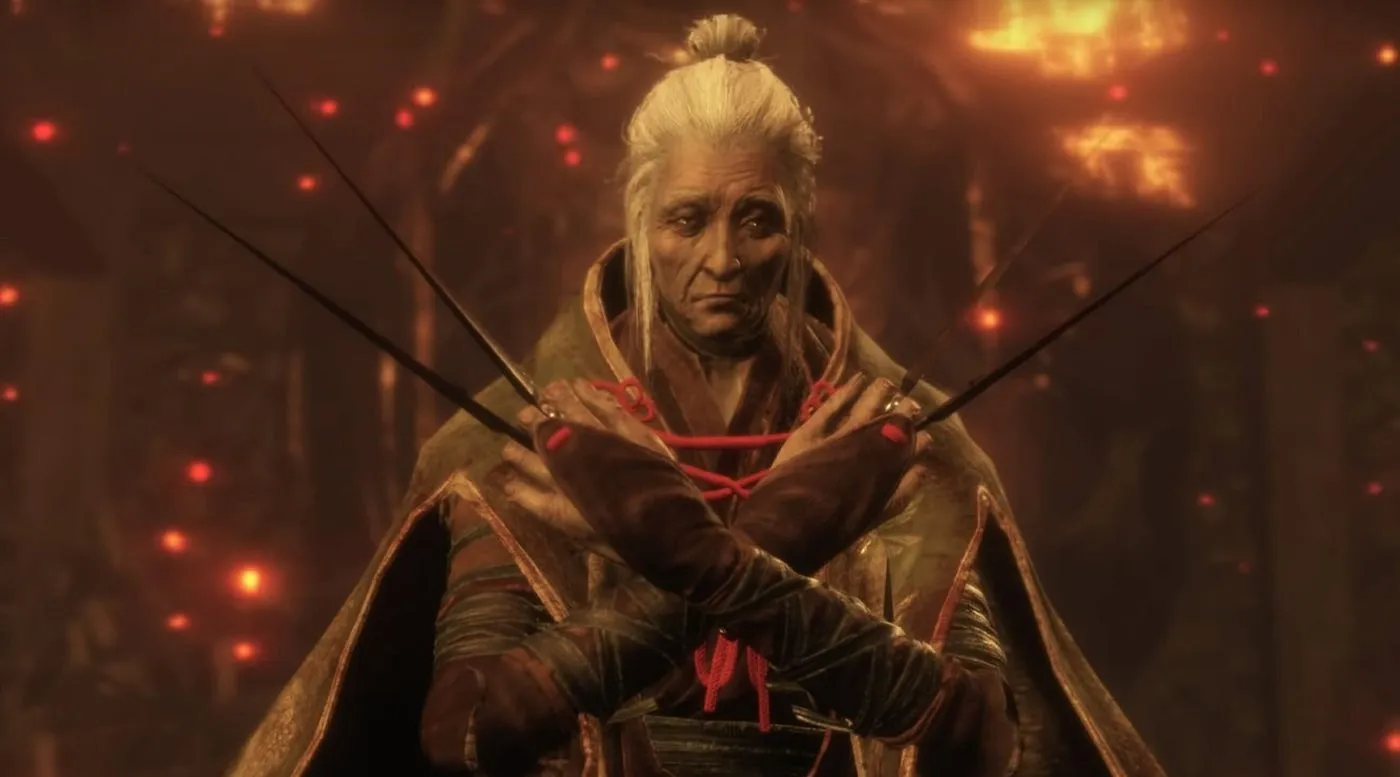
I’ve waited far too long to play Sekiro, especially since I’m a huge fan of From Software’s games (except for Bloodbourne, which I need to give it a chance again). After many friends euphorically recommended Sekiro, I was expecting a lot. It seems like a Dark Souls without all the stuff that I’m not a big fan of, such as complex and deep character customization, questionable UI work, and the online PvP (which I like the idea but had only bad experiences coming from it).
Sekiro: Shadows Die Twice Steam Link Here
Before talking about mechanics, I just want to point out that it is incredible how From Software could pick up a thematic so different from their other games and turn it into a dark fantasy that feels very unique. All character designs are incredible and the level design is insane, it’s a mix of everything you want to see on a shinobi game, from trash tier swordsman to classic samurais, from giant snakes to a group of little monkeys, from jumping roof to roof to venturing on a labyrinthic countryside village.
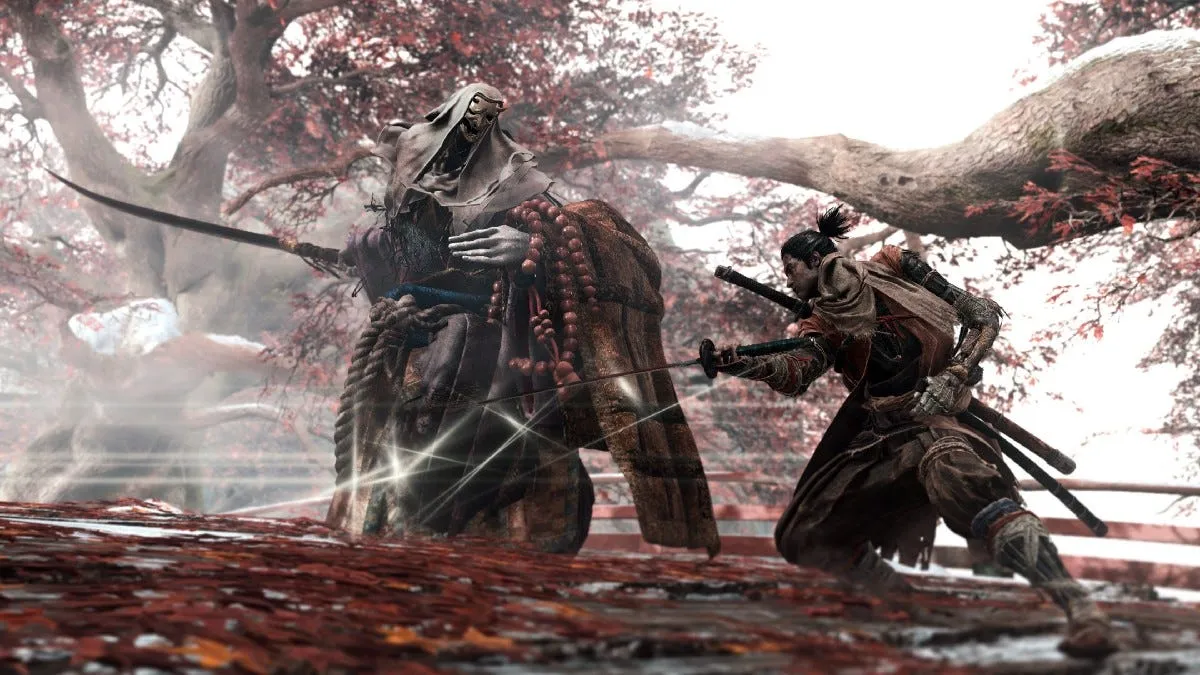
Sekiro starts by challenging all my muscle memories from other From Software’s games, while I’m super incentivized to dodge attacks on Dark Souls, Sekiro wants me to embrace attacks, parry them and sometimes even dodge directly to the attack direction (which is called Mikiri counter).
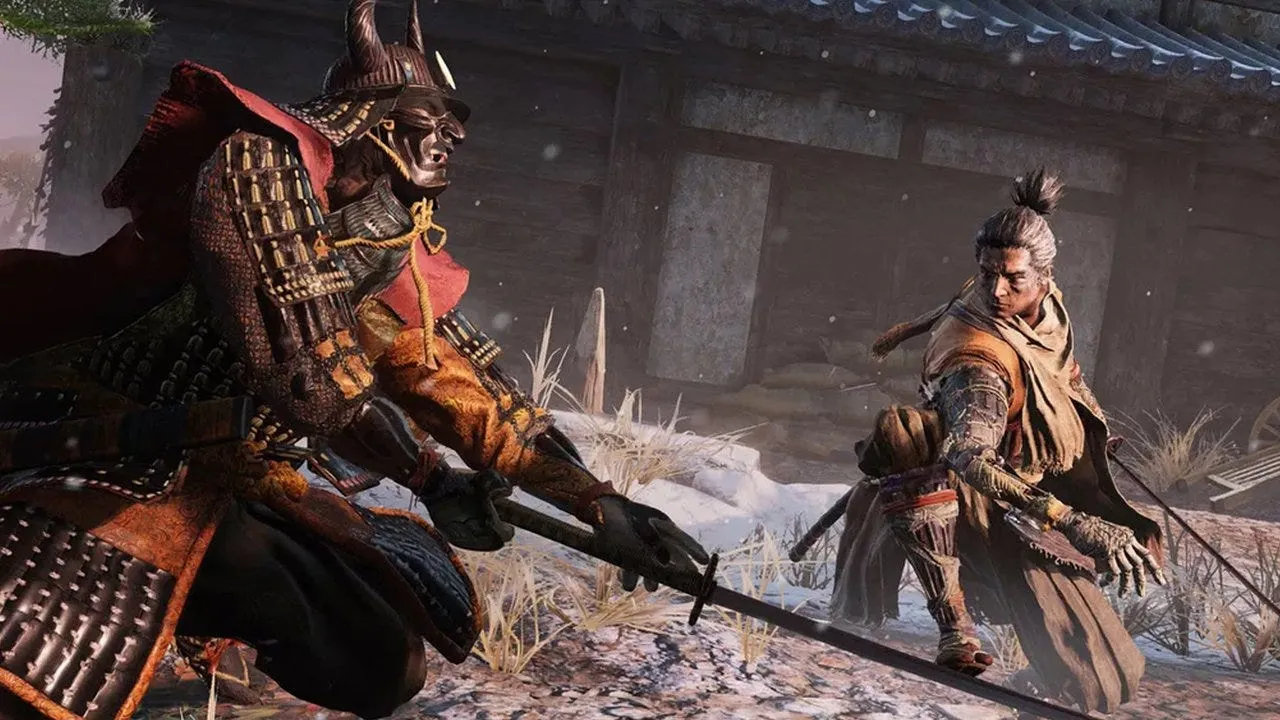
Mikiri lets you counter any “thrust” attack by dashing towards the attack during its climax. The challenge is to read their anticipation super fast and ensure that you are not going to dash towards a regular attack.
Not only I had to extinguish all my muscle memory, but the game also incentivizes me to play differently. Where Dark Souls wants me to defeat most enemies, Sekiro wants me to avoid conflict, play quietly, and kill enemies with stealth kills as much as possible. It is funny how they were able to teach me that stealth kills are 1-hit KO, but at the same time, they forged some tricky level design areas to challenge my stealthiness as much as possible.
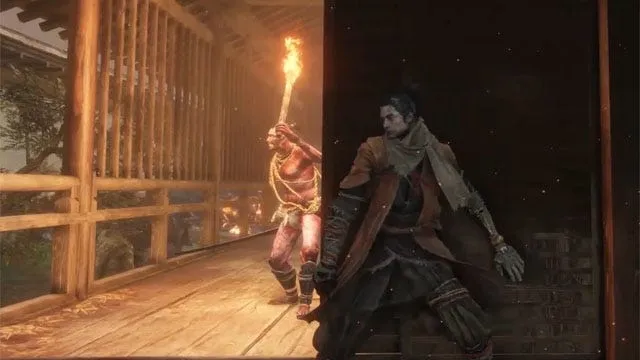
Sekiro grew on me very fast. In the beginning, I was trying to avoid conflict as much as possible, because, like any game from that company, even the trash mobs are a big risk. But after learning a few tricks, I started to feel like a proper shinobi. I was parrying any enemy, with a rhythm that made me incredibly powerful. In the end, the last boss was pretty good at telling me that I wasn’t a master yet, but after beating it, I think I can say I’m a bit closer to a low-tier video-game player Shinobi.
5. Omori
If you haven’t played Omori, I fully recommend you to avoid Spoilers, this is such an amazing game that deserves anyone’s attention. I promise I’ll not reveal anything spoilerific here.

Omori Steam Link Here
Omori is a son of Earthbound, a brother of Undertale, and a friend of Nintendo’s RPG (such as Paper Mario and Mario & Luigi series). Those references are very clear, not because of the main game system itself, but because of the narrative, polish, and most importantly, the tone. Most of the time Omori is a very light game, where a group of 6 children are venturing themselves into a weird imaginative world. This was a surprise for me after watching its trailer, which gave me the impression that Omori was meant to be an horror game.
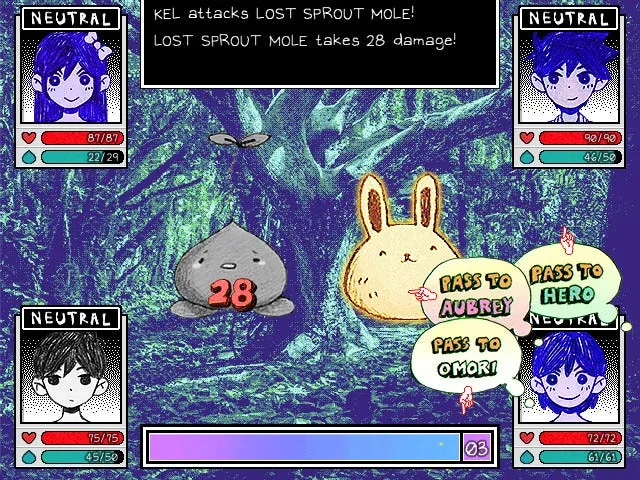
I must start this by saying that I’m not a big fan of turn-based RPGs, especially the traditional ones (like Pokemon or Dragon Quest). Omori is pretty much a traditional RPG-maker game, it has a few differences that shakes the formula a little bit (there’s a Rock/Paper/Scissors system, an Assist System, etc), but it’s nothing close to games that completely change the traditional formula, like Undertale (which I do enjoy the combat a lot). That being said, I was hooked into this game, not even the mechanics that I usually dislike kept me away from its delicious narrative. It didn’t matter that I would have to grind now and then, because the story was trying to communicate something very special, and I was eager to listen to it.
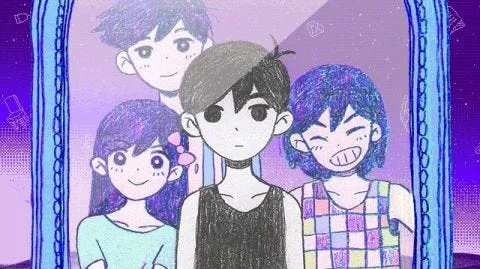
In the end, without any spoilers, Omori made me feel something very special. It’s an adventure full of feelings, but when every piece of the puzzle is put together is where the game shines the most. Omori is not easy to play, not easy to digest and it touches on very sensitive themes, and I do not recommend it to everyone. But if you want to try something experimental with a lot of love in its design, give Omori a try!
4. Wonderbox: The Adventure Maker
I’m kinda suspicious because I literally work at the place that developed Wonderbox, so this might sound like an advertisement, but stay with me. Wonderbox is a mix of Mario Maker, Captain Toad, and Legend of Zelda series. It’s a game about creating adventures, sharing, and playing other player’s creations, and as everyone around me knows, I love creating little experiences for others to try out (I’m a Game Designer duh).
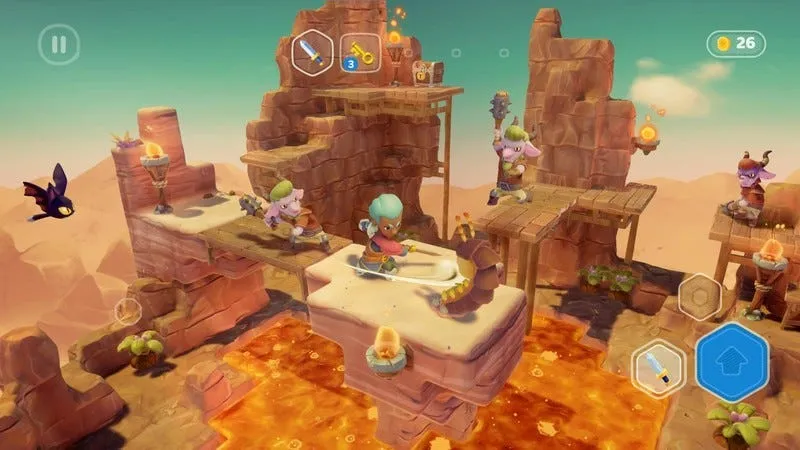
Wonderbox: The Adventure Maker Apple Arcade Page Here
This love to build small experiences made me a big fan of the Mario Maker series despite not being a huge fan of side-scroller Mario games. But Wonderbox is different, I’m a super fan of Zelda games and I’ve played captain toad more than I’m proud to admit (especially that last secret stage that took me hours to finish), so the gameplay itself fits like a glove for my preferences. In Wonderbox, all blocks matter, and the possibilities for creators are endless.
Speaking of endless possibilities, I want to highlight a little bit the “interactive blocks”. There’re many ways to guide the player throughout your adventure. A lever can be used to open a door, an NPC that requires gold in exchange for a mighty sword, even a stone frog can be pushed around as a way to solve puzzles. Many different blocks combined can generate all kinds of crazy ideas, and the promise for more content like this being released sets Wonderbox as a masterpiece for people interested in developing digital adventures.
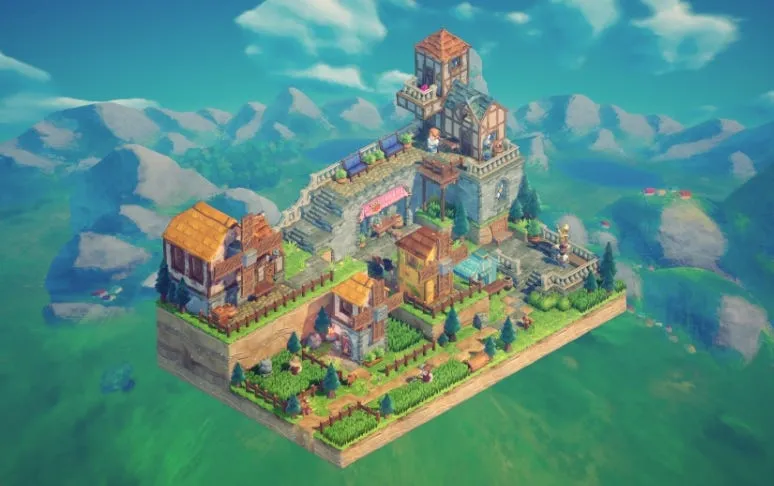
Not only the combinations for interactive blocks are endless but also blocks that are only aesthetical are also super smart. While games usually have many blocks that can be used to build a house, Wonderbox adds one type of block called “House Block” which smartly understands the layout that you are building, making you only need one block to have an interesting house. It really makes it very hard for you to build something ugly, there are almost no wrong ways with block placement.
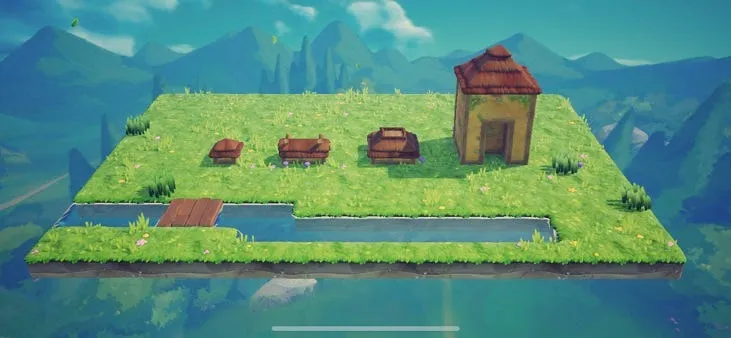
Check out this house block. The first one is when I place a single block, the second is two blocks, the third is a 2x2 area, and the last one is a “house shape”. Everything transforms smartly to create those shapes.
If you are not really into creating content or playing other player’s creations, there’s also an incredibly well-designed official campaign with all sorts of level design shenanigans. Many stages remind me of classical Zelda games, but with smart puzzles that feel unique to the Wonderbox universe. The developers are also releasing more official stages and, eventually, more official campaigns, so there’s a lot of content for those who just want to sit back and play a complete game with the developer seal of approval.
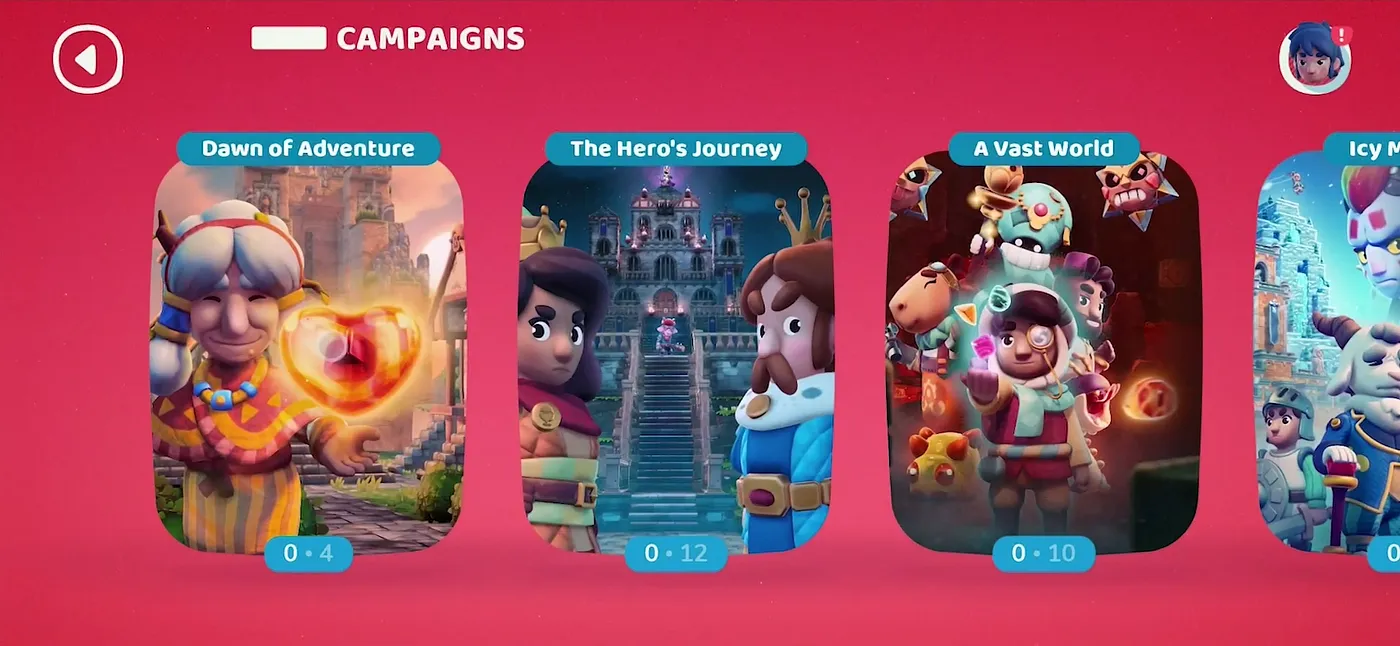
There’re 4 official campaigns with different lengths, and the game promises to keep releasing more!
Wonderbox can also be played together with other folks, and I had a great time playing it with my girlfriend. We spend hours of gameplay until both phone batteries went to zero. It was amazing to play many player’s creations, from giant complex adventures to 1-box incredible art pieces. Overall, Wonderbox is a complete and elegant experience that I’m super excited to keep playing over the years, and I can’t wait for the next updates!
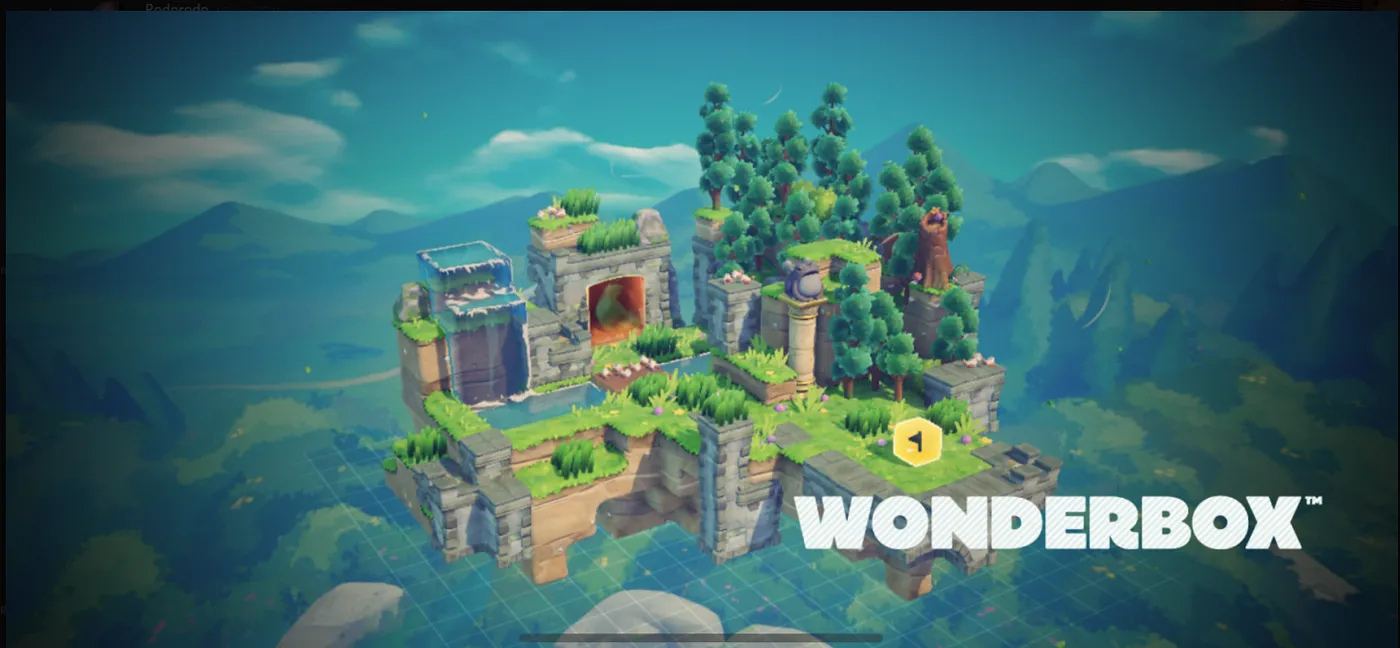
A quite big adventure that I’m creating, I hope I finish it up eventually :’(
3. It Takes Two
One of the big surprises from 2021 was It Takes Two. When the first trailer appeared at a game event (I think it was on Game Awards 2020?), I was very hooked. The trailer showed a ridiculous amount of different mechanics, scenarios, situations, all in less than 3 minutes (check it out before reading this), which was kind of a red flag to me actually. Seeing a very developer-demanding game being announced out of nowhere by EA kept me skeptical, yet very curious nonetheless.
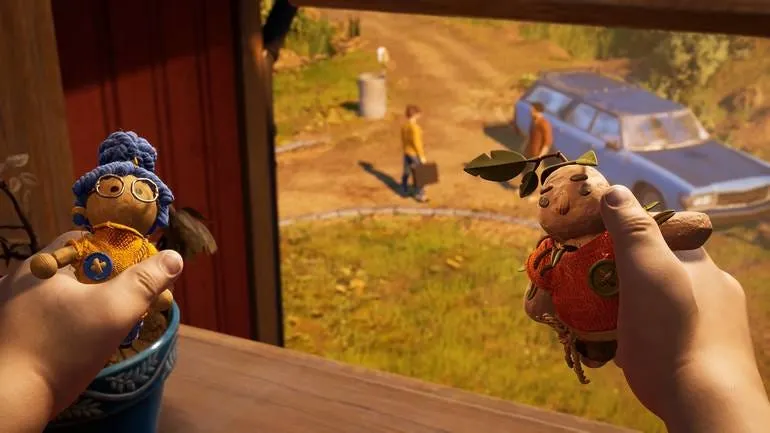
It Takes Two Steam Link Here
I’ve bought it on day 1 to play with Rodolfo, and I was very happy by the fact that just one of the players needed to buy the game to play online (which is something that a few games are starting to do and I hope it continues appearing everywhere). The game was pure fun from the start, character movement was great, interesting mechanics, platforming, and a narrative that was a little bit questionable. To better organize my text here, I’ll separate this mini-review under 3 topics: Game Design, Product Value, and Narrative.
First, Game Design. The game starts by introducing a basic move-set that includes a double jump, an air dash, ground pound, grappling hook, basically almost all checks on my platformer checklist. Besides that, every new chapter introduces a whole new mechanic for your kit, to discard and substitute on the next one. On one of them, you have a boomerang shield, another one gave you a slime machine gun, gravity boots that makes you able to walk on walls, etc. Each character has its own upgrades in each chapter, which makes the gameplay very refreshing and asymmetrical.
Get Matheus Cunegato’s stories in your inbox
Join Medium for free to get updates from this writer.
Remember me for faster sign in
Besides the “main” mechanics that are added to your character move-set, there are also a few extra mechanics in every chapter. Some are as simple as a cute frog mount that gives you a higher jump, and some are more interesting but I don’t want to spoil it here. Other than this, each chapter is filled with Mario-Party-like minigames to play 1v1 with your partner, which adds a very welcome stop now and then to compete instead of cooperating.
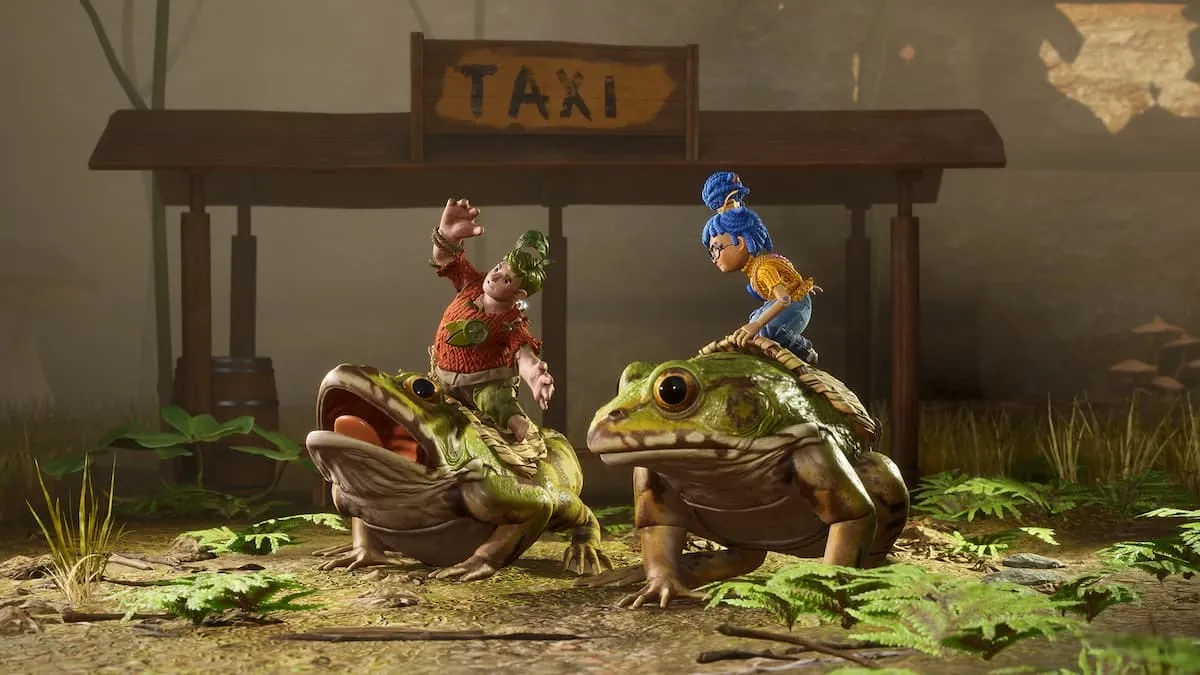
Usually, there’s also a boss on every chapter ending, and a few mini-bosses along the way. Pretty much all bosses are very well designed, none of them feels like a filler. Instead, each boss either introduces a new cool mechanic specific to that boss or uses the chapter mechanics in a twisted way. I don’t remind a single boss of the game that felt rushed, and this says a lot about the design overall.
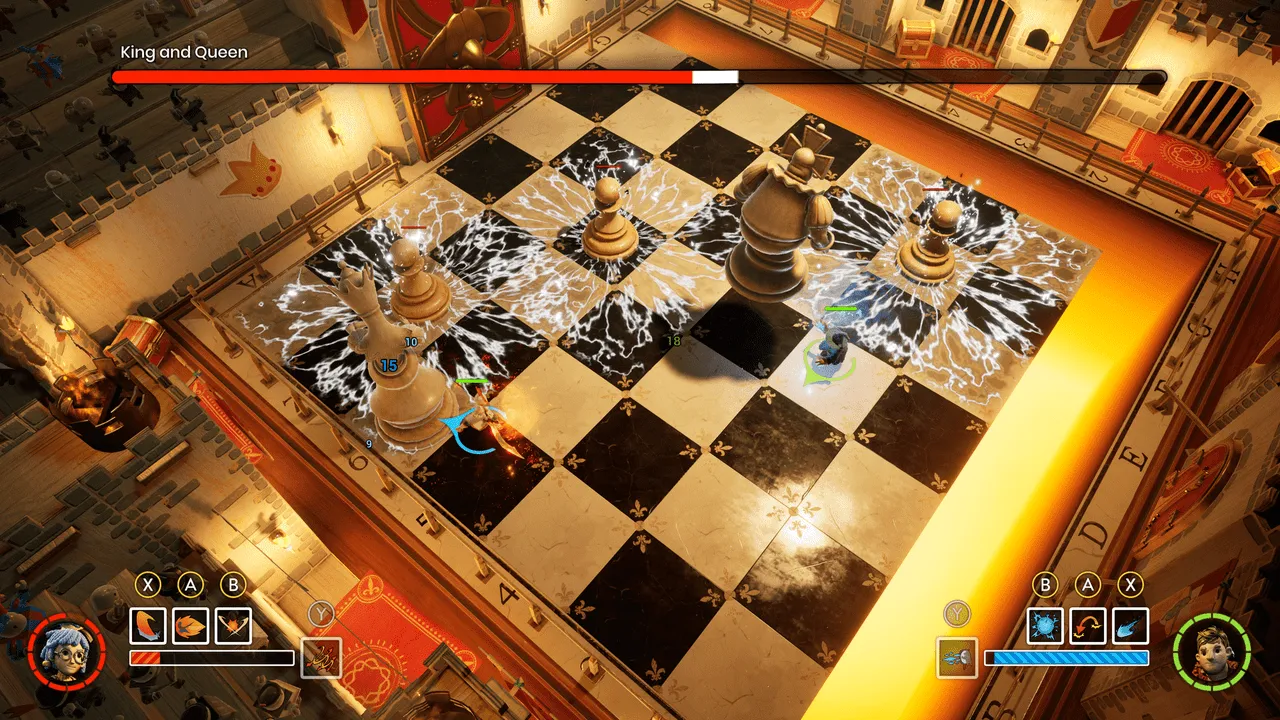
This is one example of a very cool boss. The King and the Queen spawn chess pieces to disrupt the fight, and all of them follow chess-like rules (like those pawns that are damaging just the squares around them).
Besides all these cool mechanics, It Takes Two changes its directions many times during the course of the game. Different than predictable AAA game loops (Uncharted classic loop of Narrative > Combat > Exploration > Platforming), It Takes Two surprises all the time. In one chapter you are playing a platforming game, while in the other you are in a dungeon crawling situation with a Diablo-like interface. The creativity with the camera is also very impressive, using it as a powerful tool to swap genres from time to time.
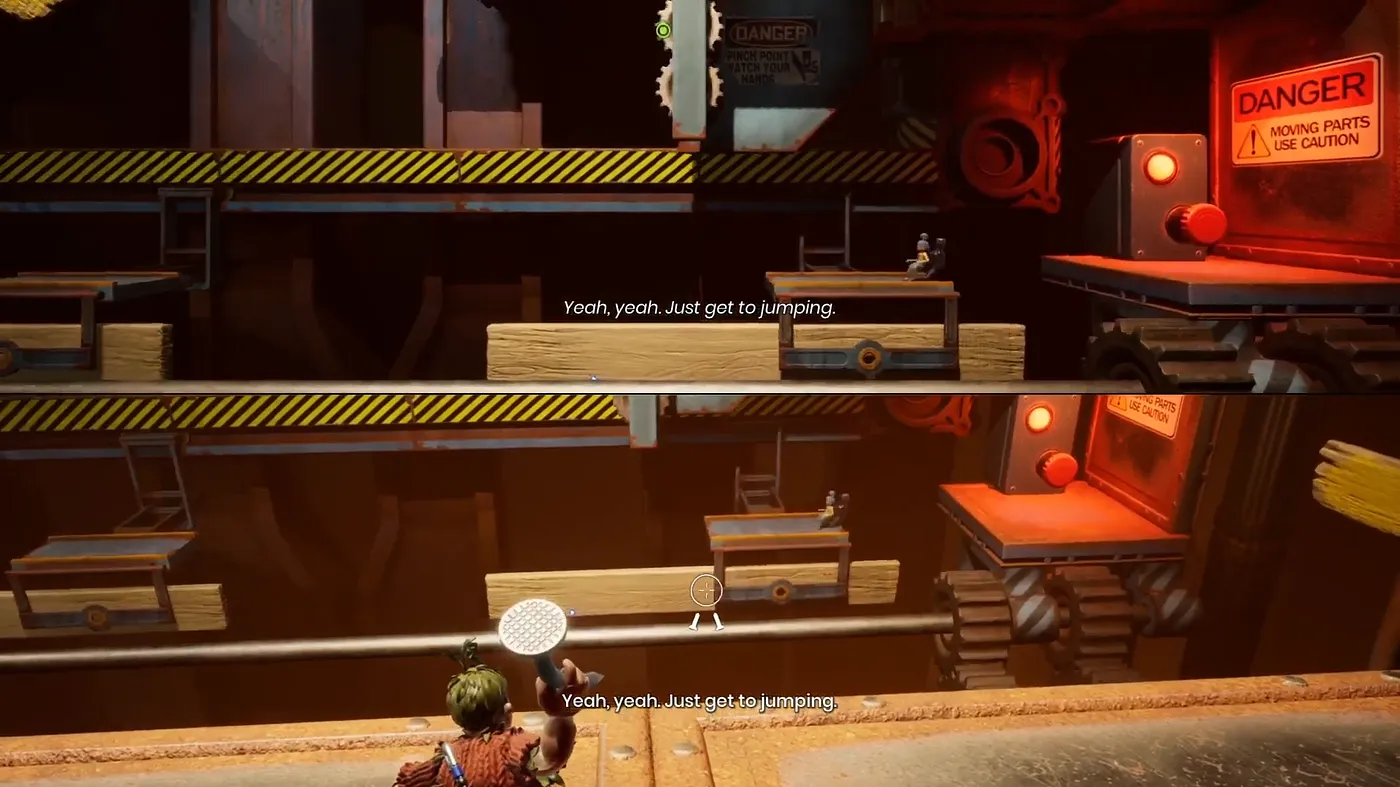
There are many asymmetrical moments where players are playing different games. In this case, May is on a platforming side-scroller segment, while Cody needs to cooperate with his nails, to stop the moving platforms.
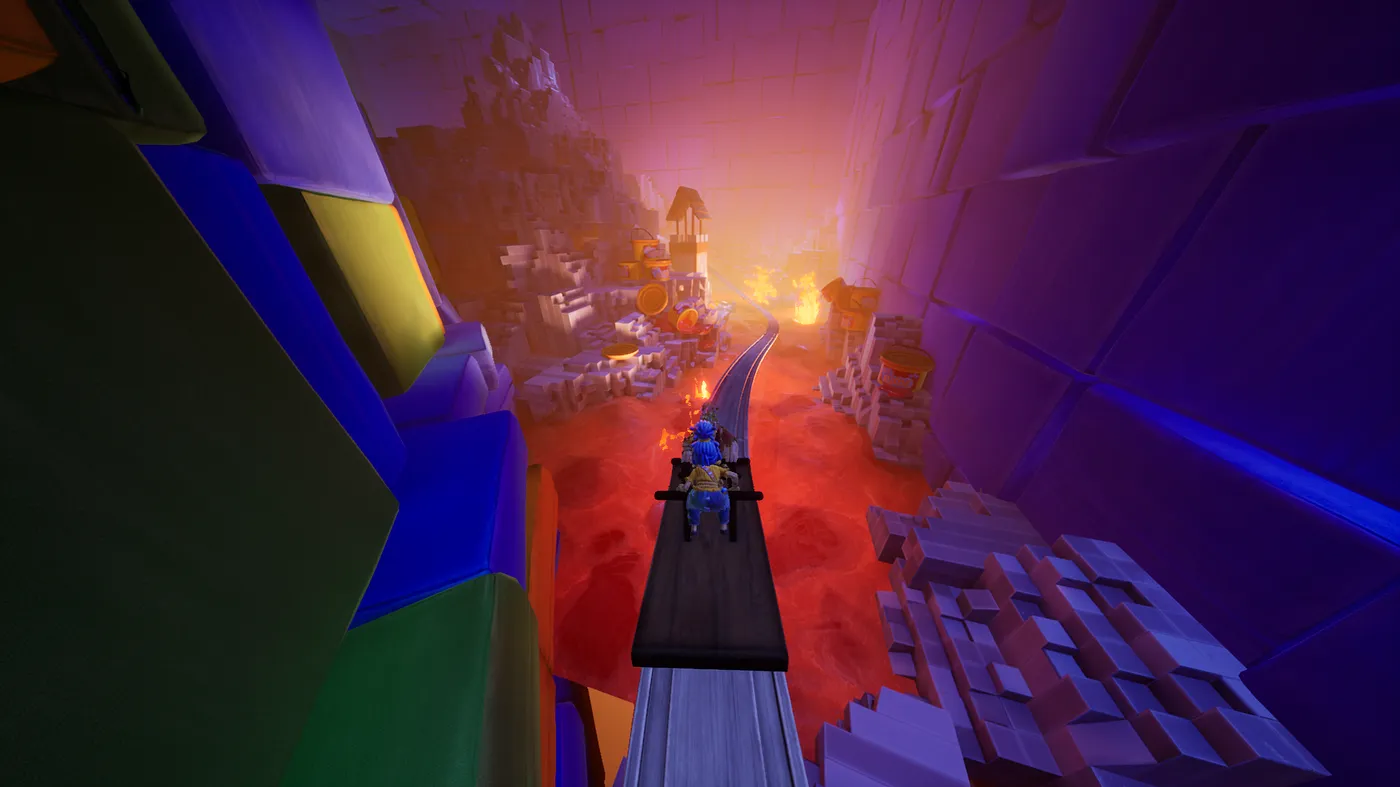
To conclude the Game Design section, I couldn’t hold myself on talking about how the level design is incredible. I always love when a game invests in creating many different “biomes”, with a large range of colors and moods. Every chapter feels different from one another, and since it takes around 1h30 to finish a chapter, the level design is always reinventing itself and never feeling repetitive.
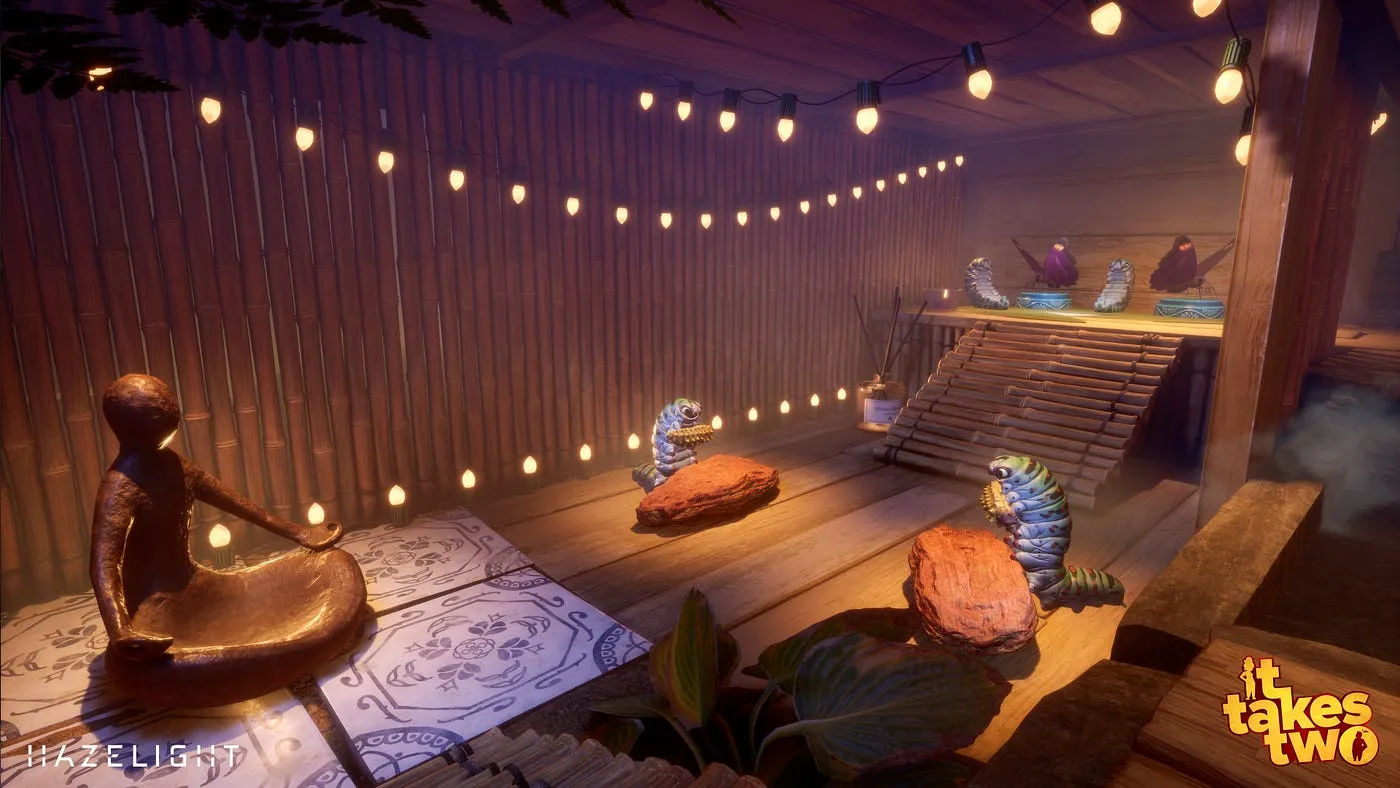
Talking briefly about Product Value, it’s very impressive how each chapter has plenty of different interactions and creativity on every corner. It Takes Two is the kind of game where you see a ball and start to wonder: “Can I interact with that?”, and you always can. Many of those interactions are even interactions that do not add to the “video-game aspect”. The image below shows a very optional “spa” area, where you can receive massage, you can meditate, take a bath on hot waters and sit on an insect-massage-chair. All of that is filled with specific animations, voice-overs, and sound design, which like many other interactive sections, adds a lot to the “feeling of quality” from this game.
I guess the narrative is the only place that I cannot say that I loved, but still, I’m not super sure how I feel about it. The “macro story” where there’re 2 toys trying to become human again while trying to fix their relationship was not my cup of tea, especially when there’re a lot of dramatic scenes with their daughter sad as hell, “showing” how divorce hurts your family (which is a narrative that I very much dislike, avoiding a divorce sometimes can hurt your family way more).
That being said, the “micro stories” where there’s a crazy book playing with the couple, giving them insane quests while screaming awesome dialogues as good as your favorites animation movies, was a thing that I’ve enjoyed a lot. Not only that, but the chapter’s micro-stories (the squirrels, the frogs, even the elephant section to be honest) were also incredibly funny. It’s rare to see this kind of dialogue on games (reminded me a lot of Conker’s Bad Fur Day actually), and for that, I can affirm that I was on the team that thought the narrative has more positive points than negative ones.
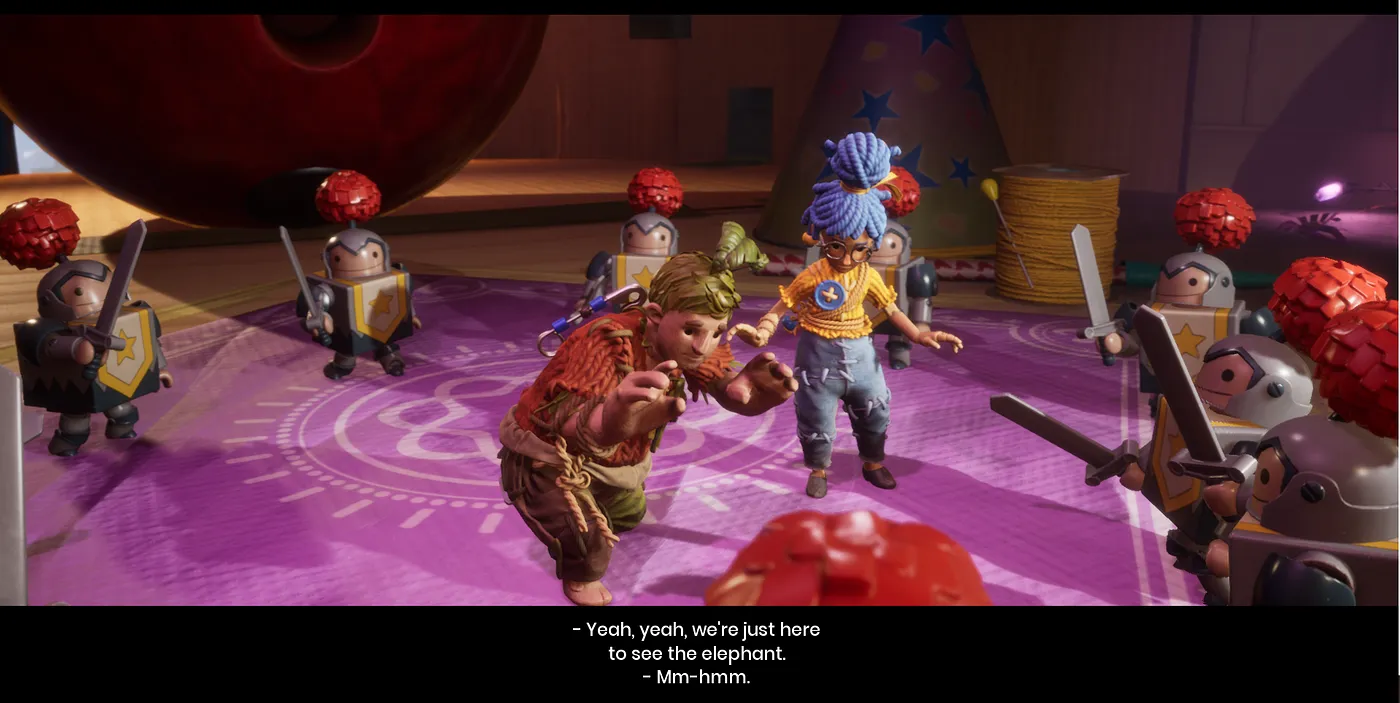
Yeah, we are just looking for the Elephant, guys.
The only thing that I disliked was a very personal thing related to what seems to be the game selling point. I was planning to buy it to play with my girlfriend, who is not a very gamer person. It Takes Two doesn’t have many ways to lose, but it has a lot of complexity in its gameplay. It’s a quite hard platforming game, where you have a double jump, crouch, run, air dash, grappling hook, many very complex positioning situations (especially during bosses), and a few other stuff that appears on specific chapters, like 3rd person shooter sections. For that, I just want to raise that this doesn’t felt like a casual game in many aspects and many couples might have difficulty enjoying the experience.
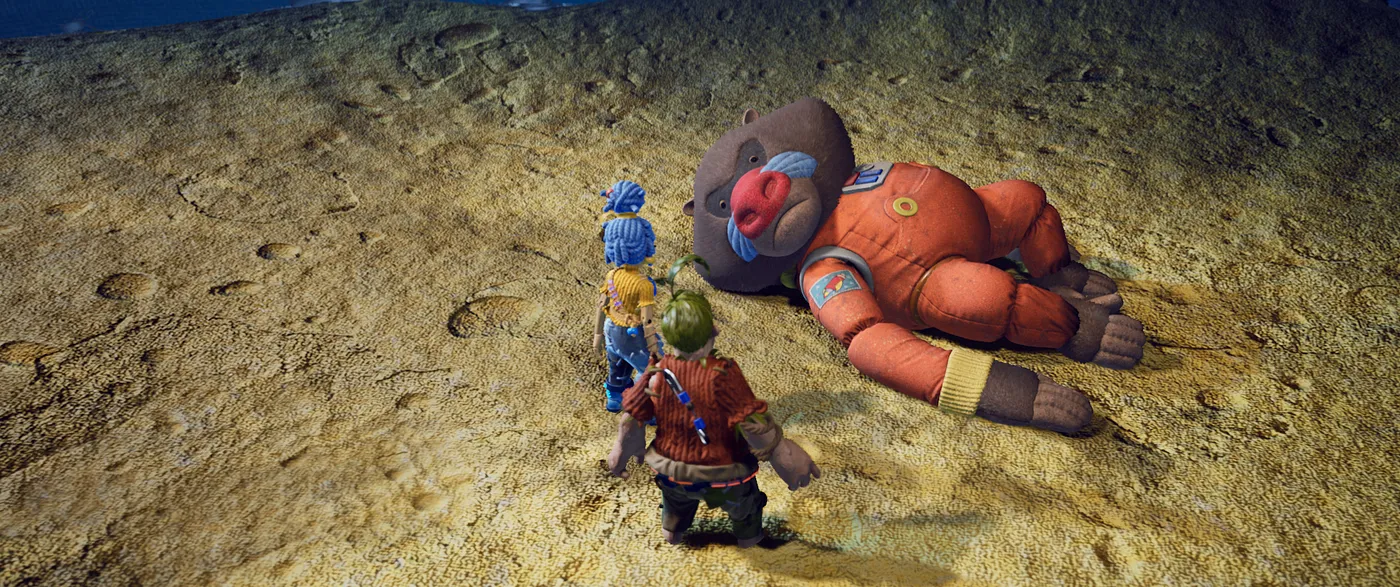
It’s rare to see games that are meant to be played exclusively with 2 players, and before this one, Portal 2 coop mode was the one that nailed that aspect to me. But it is very easy for me to say that It Takes Two not only elevated that bar very far away from my love for Portal 2 Coop mode, but it also put itself as one of the most incredible games that I have ever played. Highly recommend it, good job EA!
2. Half-Life: Alyx
Alyx certainly got me into a bad habit, where I can’t play any VR game with the same eye that I used to play because Valve raised the bar very high. Not only the game is gorgeous, but the quality in each scene is scary. Each small segment of the game feels like one of those Disney simulator games on their theme parks (and I mean the new ones!).
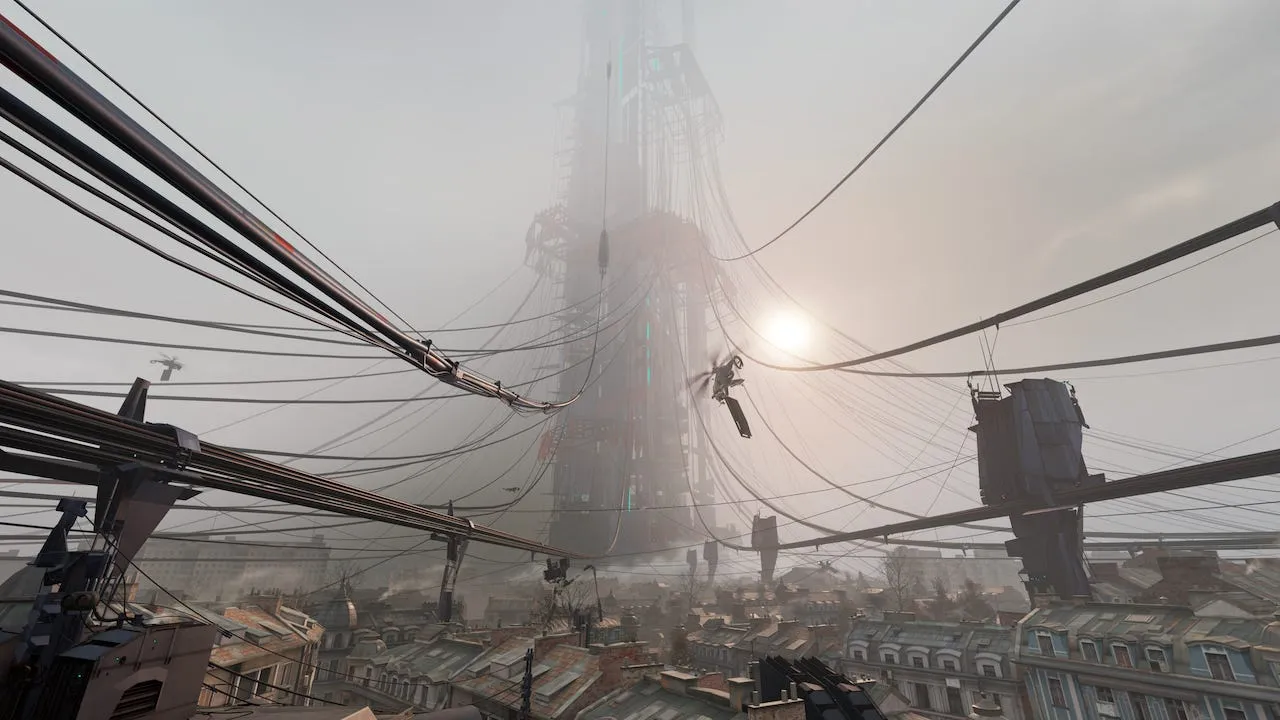
Half-Life: Alyx Steam Link Here
Art, Design, Sound, Physics, and overall systems, everything is incredible, but since all my reviews are more focused on Game Design, I want to discuss a little bit about a few things that caught my attention, and why I think they’ve done a tremendous job on System Design for a VR game.
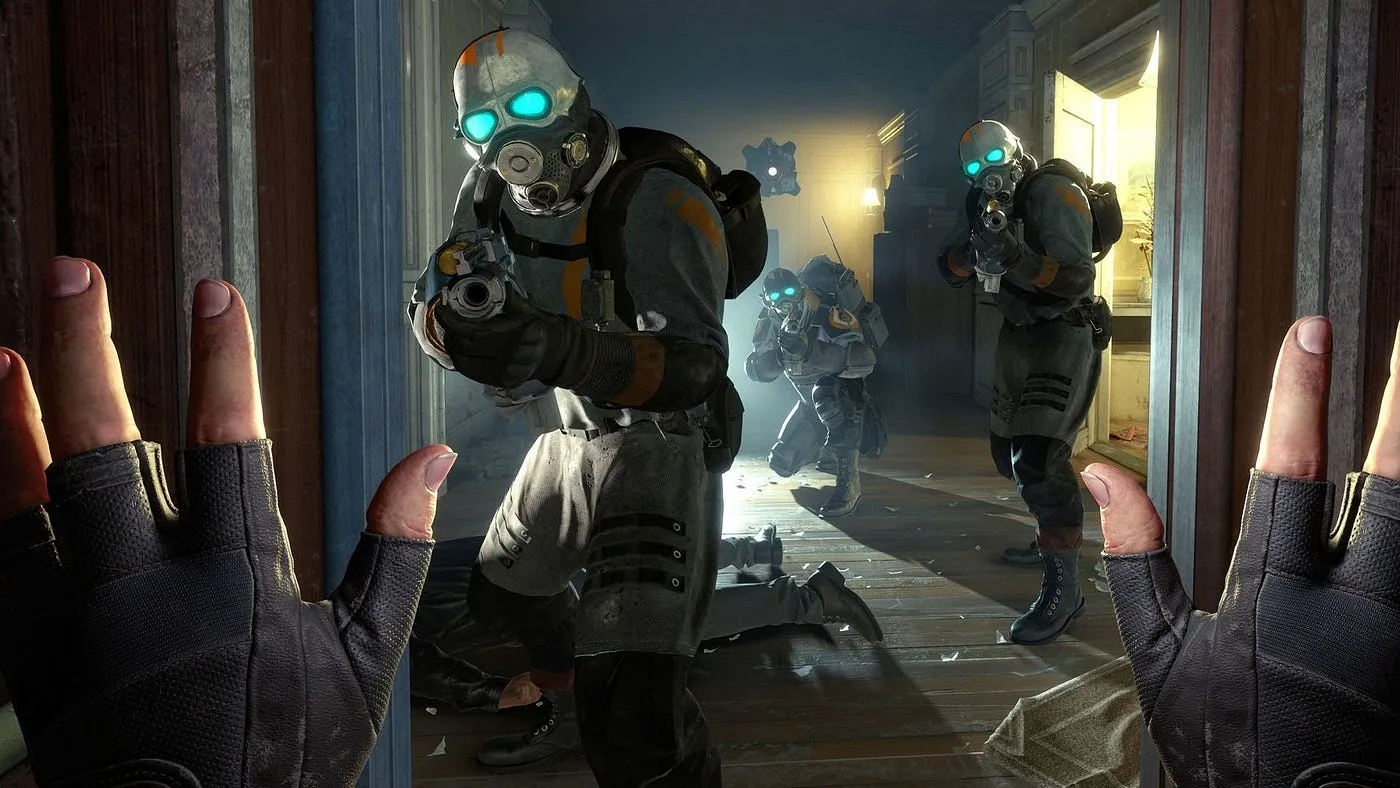
First of all, the scope. Looking at other big VR titles, it’s clear to see how well they choose their scope. Although Alyx is certainly one of the most AAA games for VR, their scope for feature quantity seems to be smaller than other games. When I’m playing “The Walking Dead VR”, they have it all. There’s climbing, multiple pockets, inventory system, crafting tables, multiple weapons with different ways to interact, narrative, semi-open world, puzzles, side-quests, etc. Don’t get me wrong, Alyx has most of that stuff too, but it’s easy to see that they choose to make each of those with a small and simple scope, and aimed to polish it to the max. They nailed it on everything that they’ve committed to doing, no feature feels clunky, and this is the ultimate compliment for a VR game nowadays.
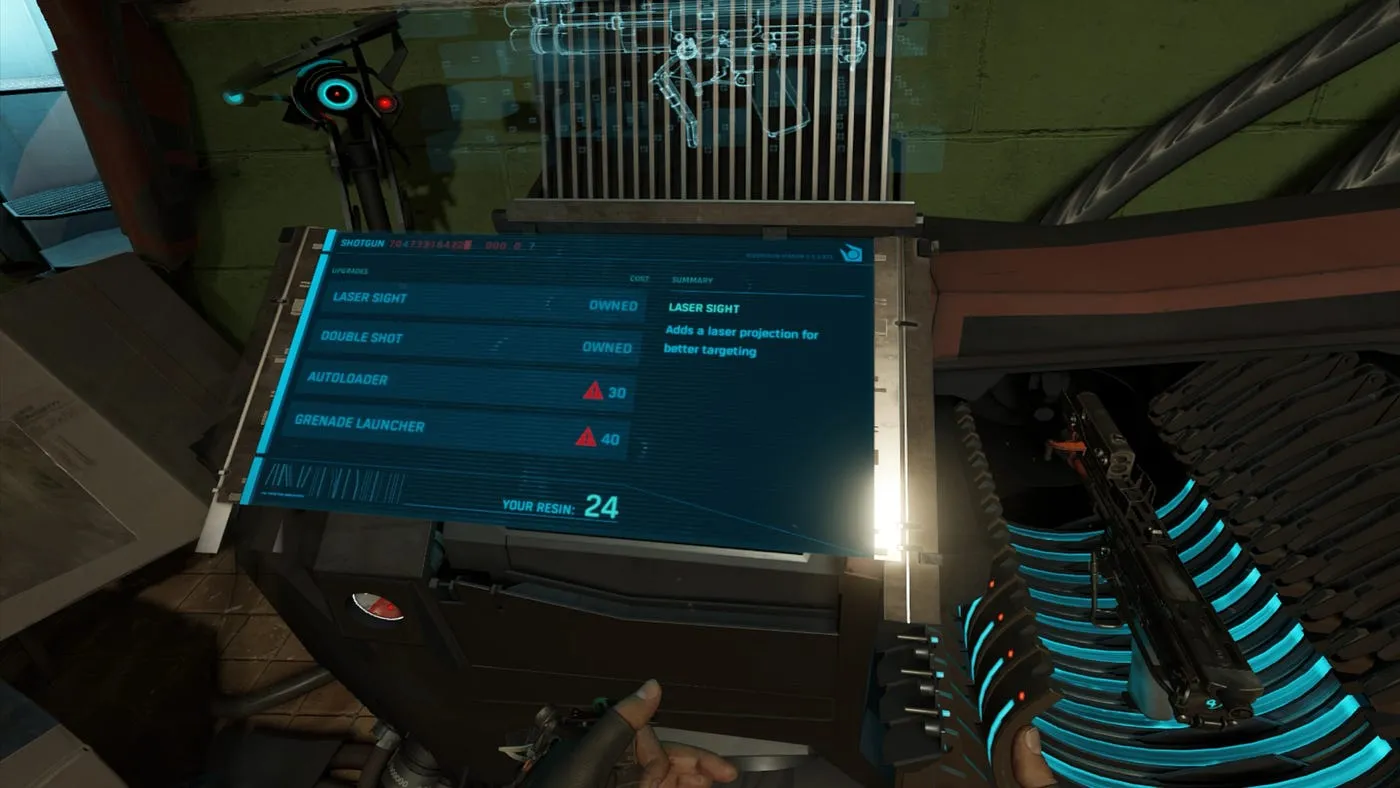
Here’s the upgrade system. You put your weapon, spend one unique currency (not many scrap materials) and choose 1 between 4 simple upgrades for any of your weapons. Comparing to Walking Dead VR that has a recycle system, blueprints, weapon durability, etc, this seems a very simple and elegant choice.
The second point is the chapters. Like other Half-Life games, none of the chapters feels the same. On one, you are exploring a calm neighborhood jumping from window to window and running above rooftops, at the other you are on a complete dark sewer with nothing but a small lantern in your hand. For those who played Half-life 2, it feels like the difference between playing “Water Hazard”, “We Don’t go to Ravenholm”, “Sand Trap” and “Dark Energy”, where none of those feel close to each other and you can’t stop playing because the rhythm never disappoints.
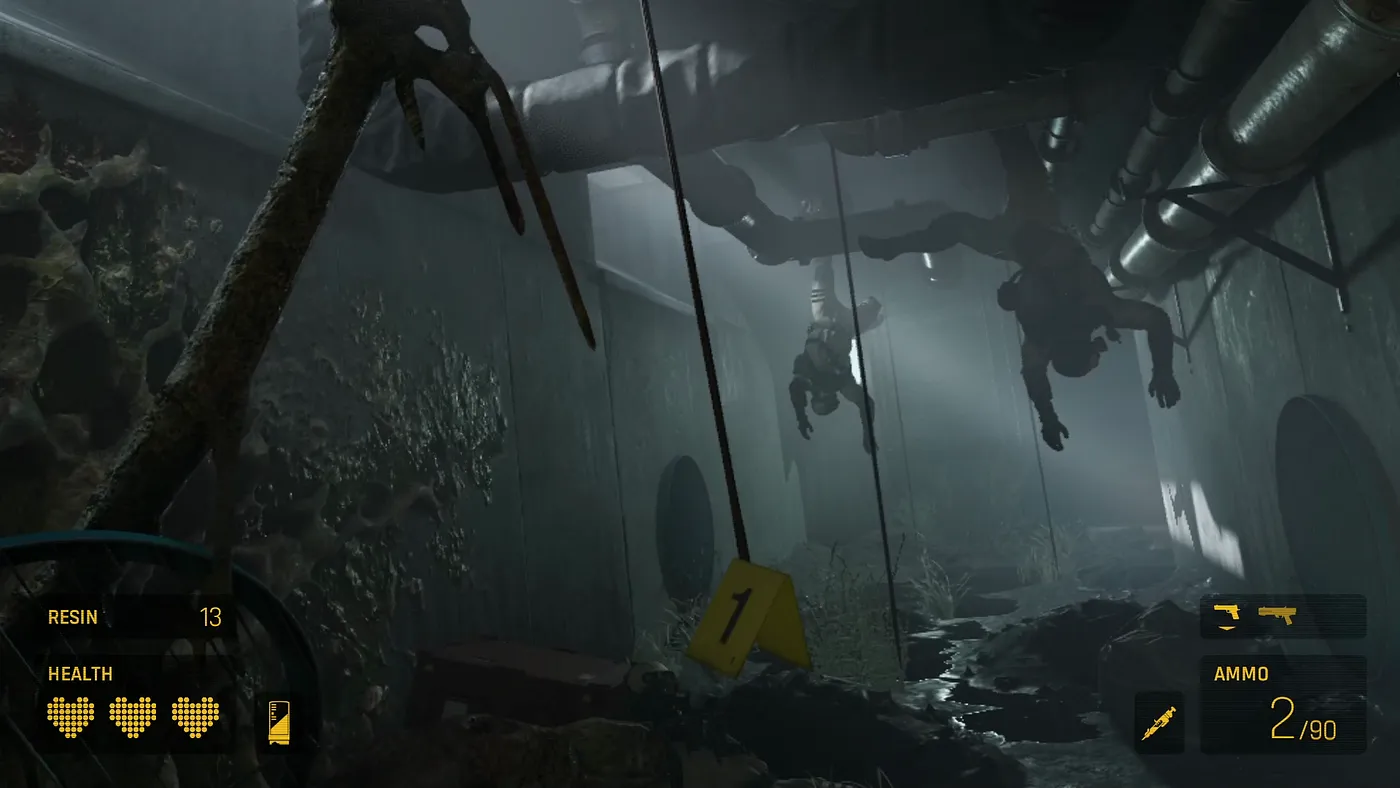
Half-Life series always felt a little bit like a horror game, and Valve saw that opportunity for VR. They went deep into the horror genre in this one, which fits perfectly for VR.
The last point before I start spoiling the game was the connection with the franchise. For those who played the previous HL games and were eagerly waiting for a sequence, Alyx delivers it. Even though Alyx is not Half-Life 3, it adds to the story like any other Half-Life game. That’s all I’m going to say. Go play it! (For those who hadn’t played the other titles, I recommend playing Black Mesa, then Half-Life 2, Half-Life 2 Ep1, Half-Life 2 Ep2, and then Alyx. The game will still be good without the narrative context, but god, the context made me shiver a lot).
1. Outer Wilds
Damn, I don’t even know where to start. I just wish I had the possibility to erase my memory and play this thing again without knowing anything. Thank god they just announced a DLC for September, exactly when my vacations will start ❤.
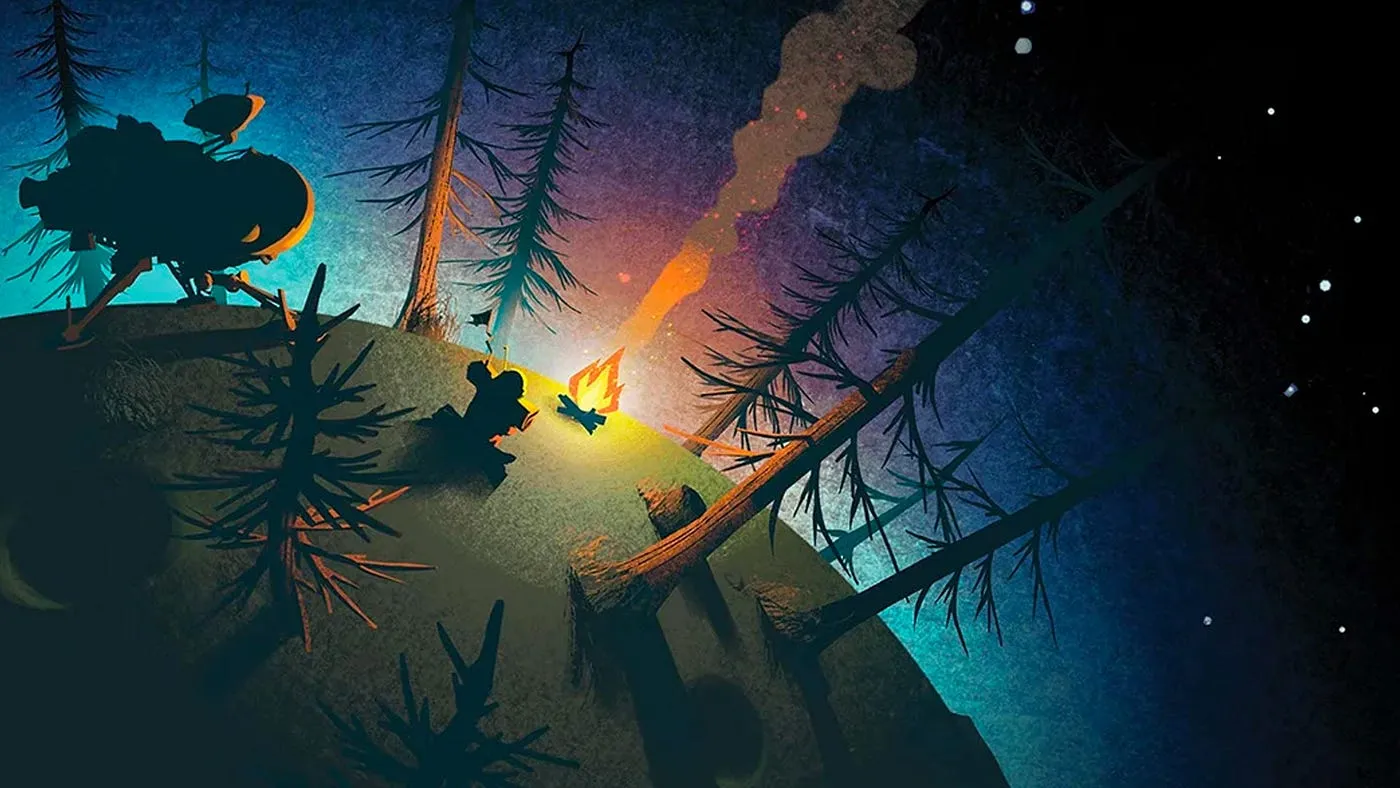
Outer Wilds Steam Link Here
I promise I’ll not spoil anything problematic here, this is a game that you should go blind or very close to that.
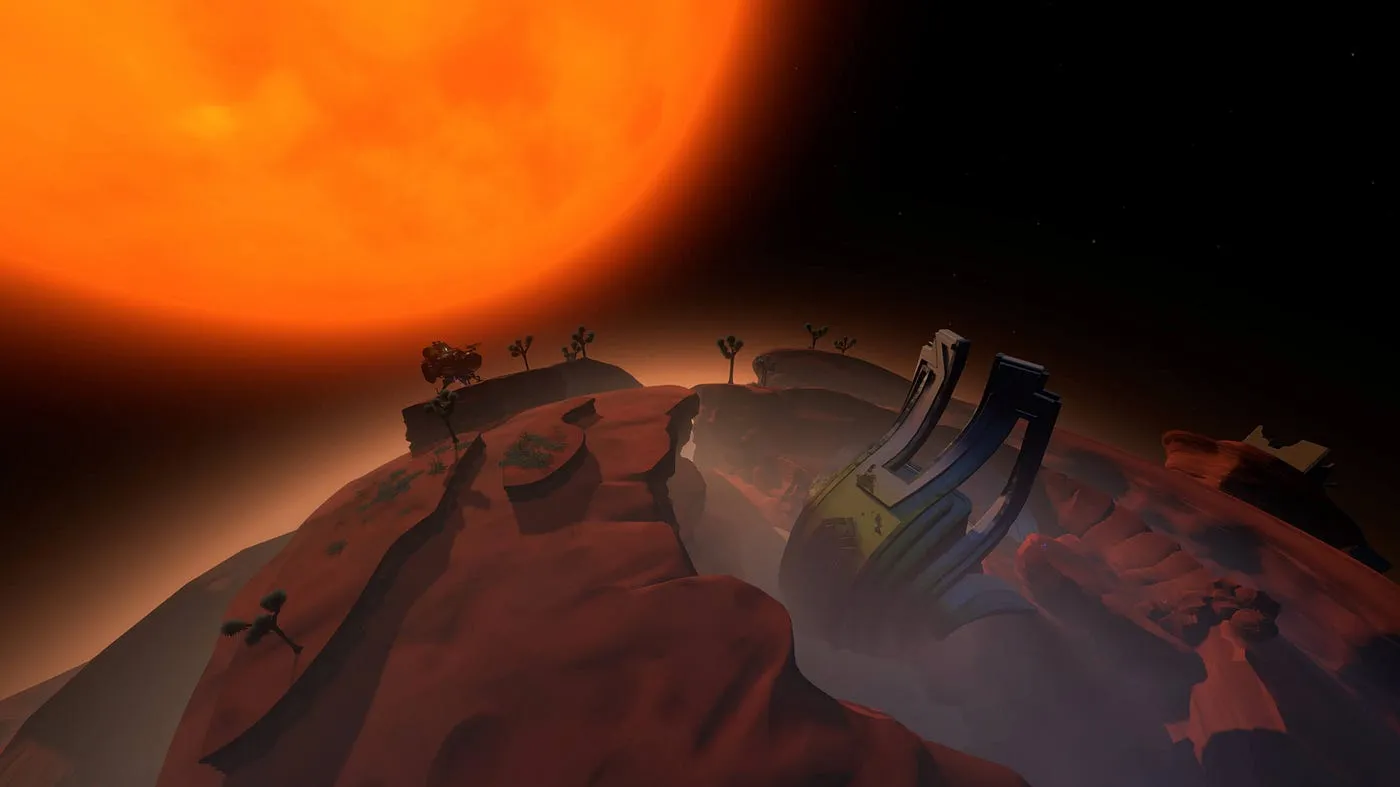
Ok, Outer Wilds is a game with a mechanic similar to The Legend of Zelda: Majora’s Mask, where there’s a timeline of events happening in real-time on an organized schedule, which for Outer Wilds is a 22-minutes loop. Games with these mechanics are very well described in the GTMK video “Clockwork Games and Time Loops”. The thematic for Outer Wilds is, as you might have noticed, interplanetary travel and exploration. Let me just say that this is one of the themes that are less interesting to me, I’m not really into sci-fi stuff, which might convince people like me to give this masterpiece a chance.
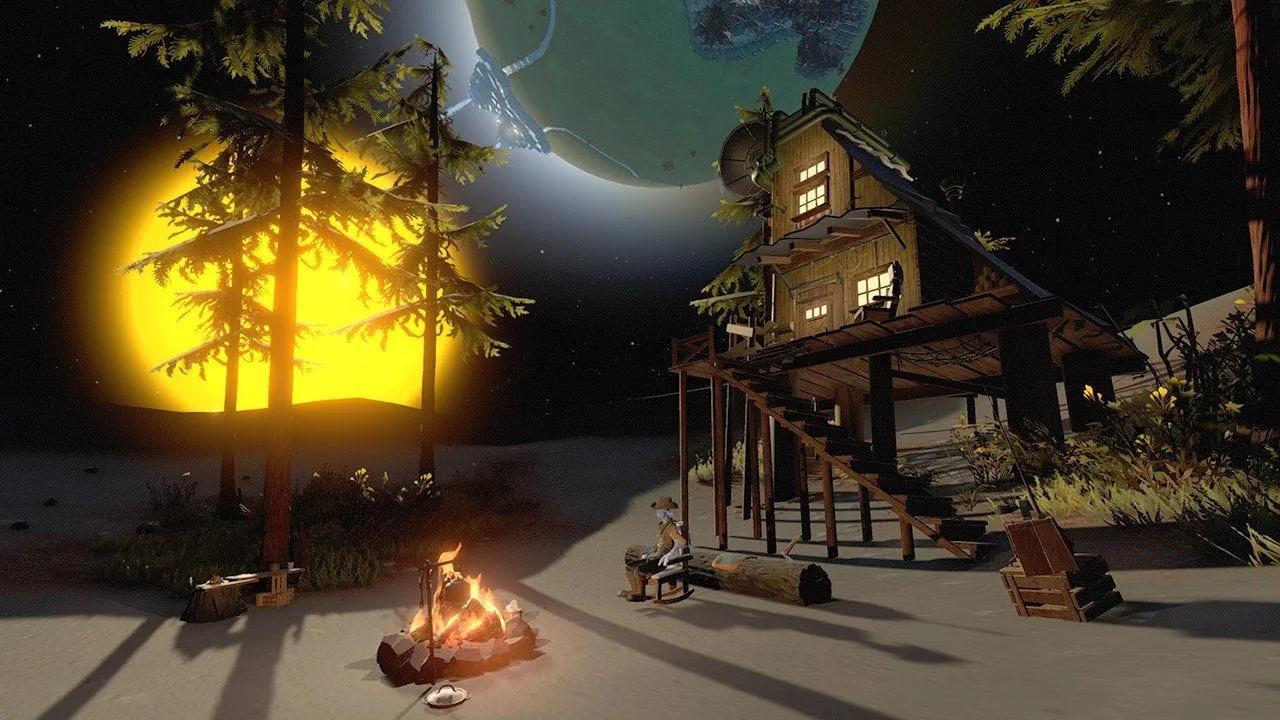
For Outer Wilds, basically, you are trapped in this 22-minute loop. The sun grows into a super-nova, explodes, and you wake up 22-minutes in the past. There’s no clear goal at the beginning, your curiosity is what drives you. You want to understand why you are stuck in that loop, why the sun is exploding, all of that while trying to investigate other planets and uncover the mysteries of an extinct society of aliens that were there, on those planets, way before your species appeared.
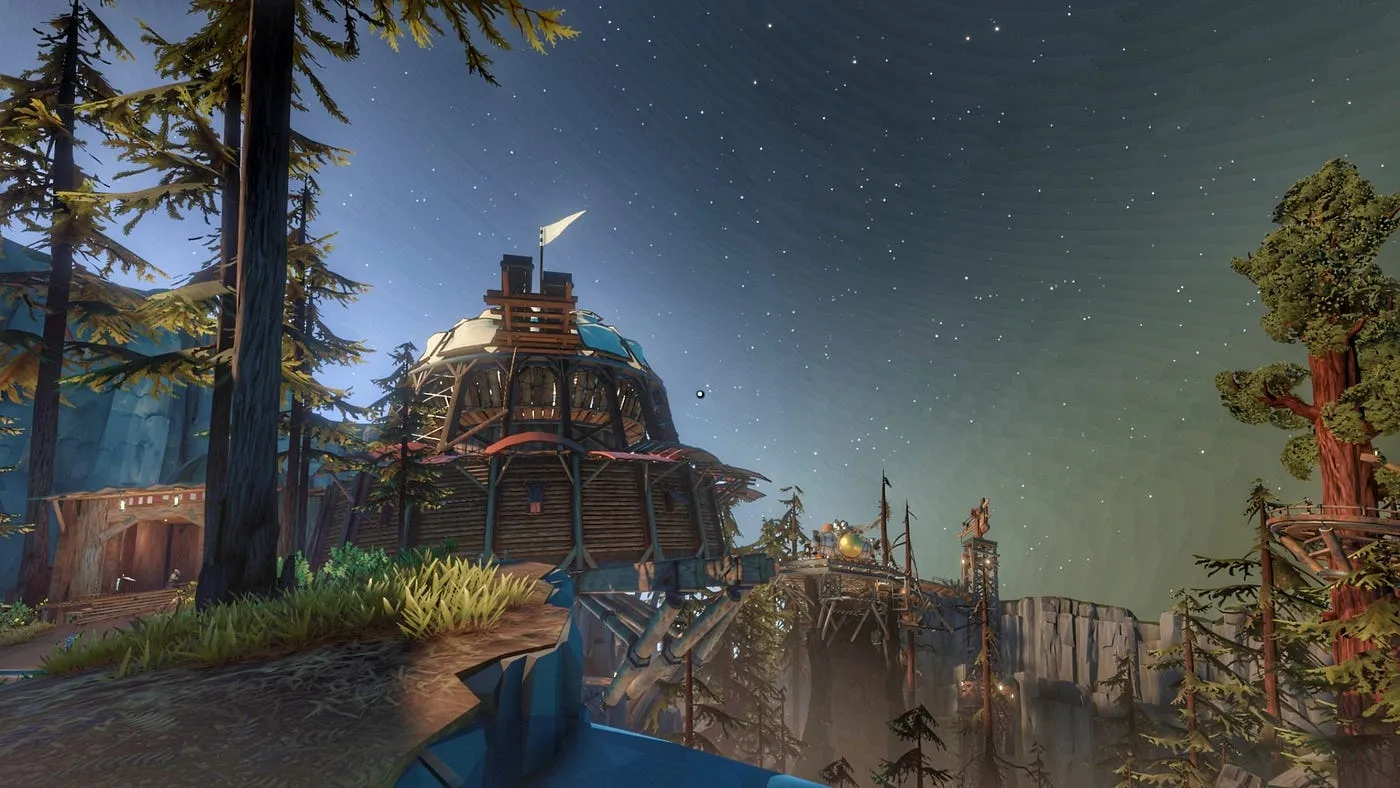
Spoilers are easy to slip here, so I’ll focus my review here on cool features and how beautifully crafted the concept of this game is implemented. I’ve discussed with many friends that the most impressive thing about Outer Wilds is how “alien” everything feels. Not only in-game stuff, I mean, the Game Design structure itself is also very different from any game that I’ve played before. Even the technology aspect of it is impressive, many different interactions that happen in this game I’ve never seen a game doing before.
Similar to The Witness, Outer Wilds works around the “MindVania” concept (which is a term that my dear friend Felipe introduced to me), where on a Metroidvania you can only progress with upgrades such as double jump, in a Mindvania the “upgrades” are information. If you know everything about the game, you can beat it in 20 minutes in your first run, but it’s during your intense exploration that that information is revealed.
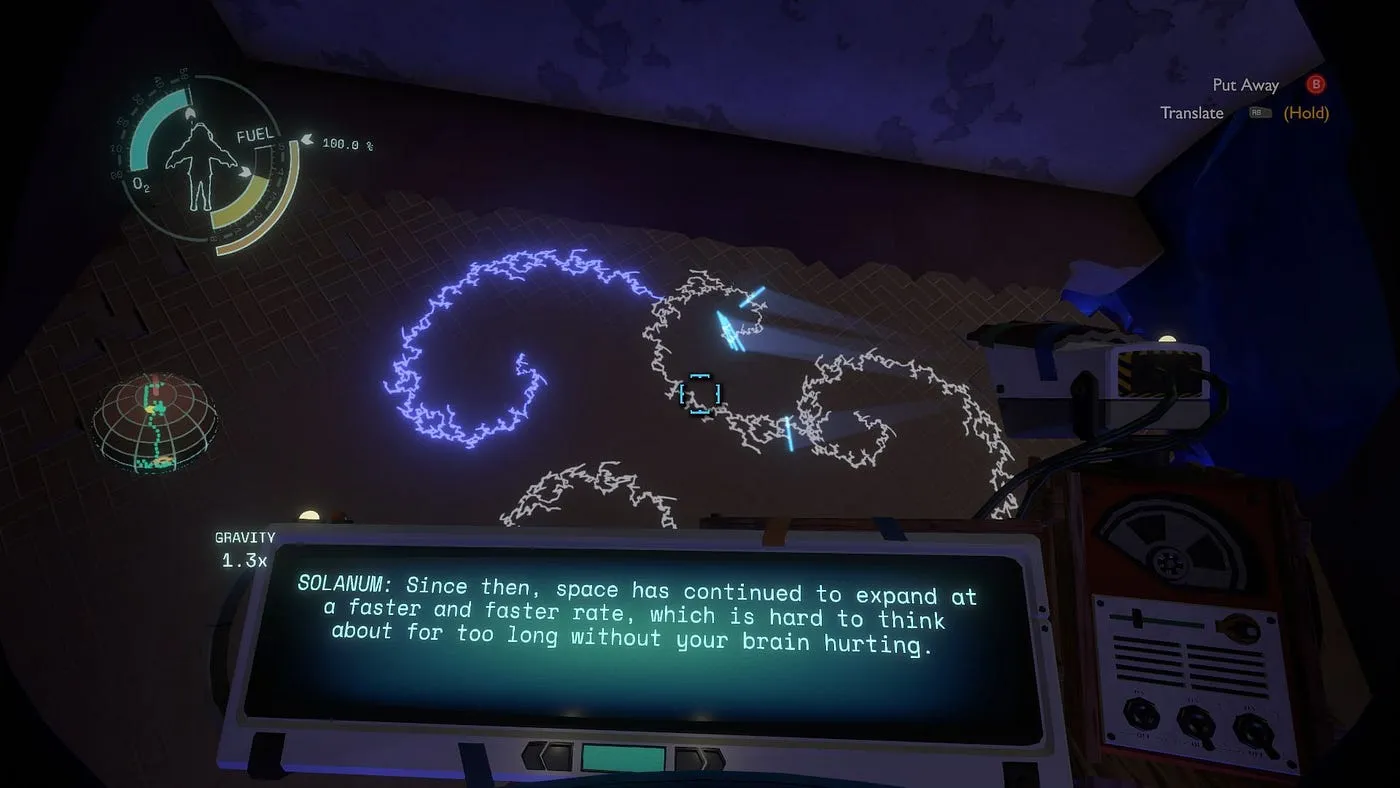
Speaking of intense exploration, this was the only game that made me feel completely like an archeologist, where you have to uncover dialogues from a different species to discover the mysteries of this universe. When I said many mechanics felt very “alien” I think one non-spoilerific example is the way you read the text in this game. Basically, there’s this spiral-like dialogue where texts are branched based on a very visual reply system. It feels very weird yet very familiar since it’s no different from a simple reply system that we can found on any online chat.
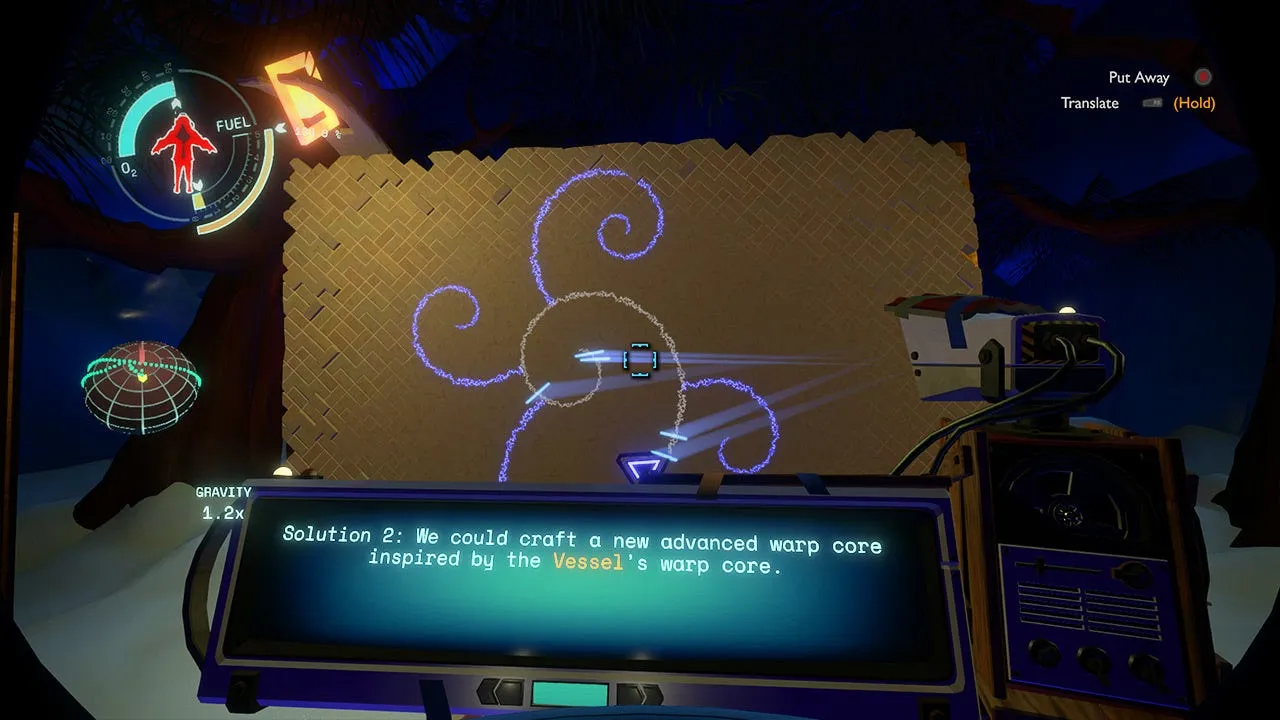
In this image, the player is reading the main branch, but there are 4 different “replies” attached to it, where all of them are referring to the central text.
There’re many other examples that I think it’s better to leave out of the review. The only “cons” that I can think of on this game is how unapproachable the game is in the first 2h~3h. It’s a lot of information scattered around on an open-world game, and their connections are easier depending on the order that you interact with them. I don’t think there are many good ways to solve this problem considering the overall experience, just raising that I considered dropping due to the overwhelming amount of different information.
My experience was very confusing at first, but I’ve learned that it’s ok to feel lost at the beginning. The game does an excellent job of distributing all the information smartly across the galaxy, to make sure even in the worst-case scenario you will eventually catch up with everything. To finish this, I just want to say that everything will make sense and you’ll have a hell of a time with this game, I guarantee.
Other Stuff that I’ve played and enjoyed
There Is No Game: Wrong Dimension
This is a very meta game about not having a game at all. Gotta say that I’m not a fan of Point and Click Adventure games, but this one does a fantastic job of twisting this kind of mechanic. I’m not going deep because there are a lot of good surprises here, highly recommended, especially if you enjoy point and click.
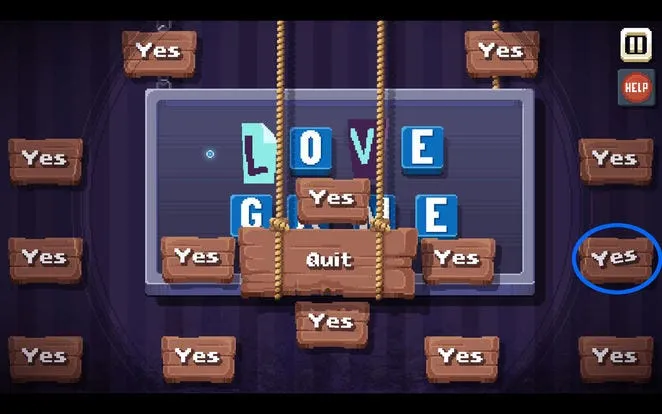
There Is No Game: Wrong Dimension Steam Link Here
Waltz of the Wizard: Natural Magic
Waltz of the Wizard is a VR game created for the Oculus Quest 2 where they make everything compatible with the beta hand-tracking feature from the Quest 2. It was my first time playing a game created specifically for hand-tracking, and boy, it feels very different to control everything with your fingertips. It gave me a glimpse of the future and for that, I’m truly grateful.
Destroying objects just snapping your real fingers feels absolutely great. Waltz of the Wizard: Natural Magic Oculus Page Here
Darksburg
I haven’t played the whole game, but I just want to recommend it as one of the most interesting aRPG out there. It’s basically a Roguelike Diablo with some very interesting classes. I’m a huge fan of Shiro Games, so this is just another great gem that they’ve released. It can be played cooperatively and it’s very lovely.
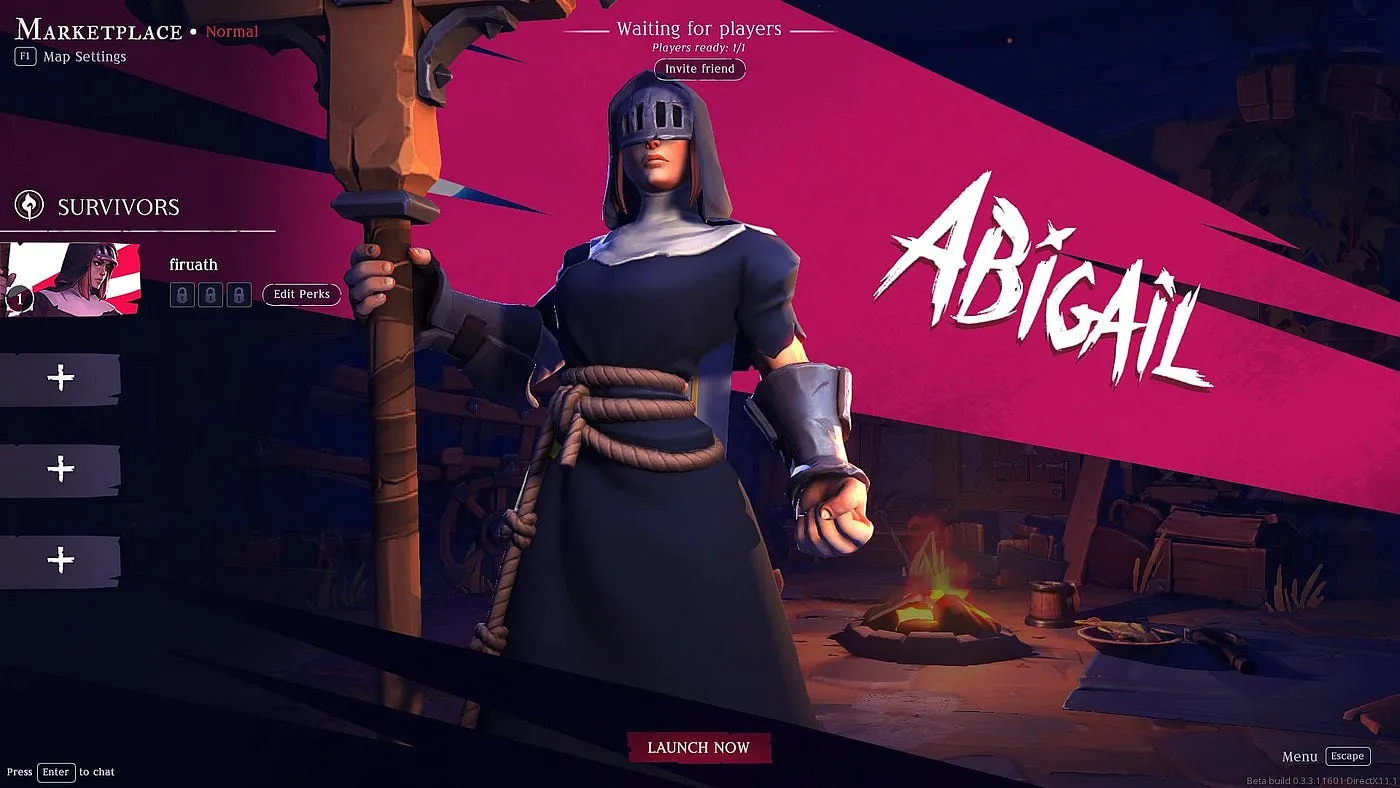
I just loved this character selection screen with this cool typeface and this magenta stylized brushstroke. Darksburg Steam Link Here
Ori and the Blind Forest
Like many other games that I’ve talked about here, Ori is one of those that everyone already played and I was the last one playing it. I ended not being a huge fan of Ori, even though I’m a fan of the genre. The movement of the game is fantastic, the art and soundtrack are gorgeous, and the second-to-second gameplay is pretty good, I don’t disagree with any of that. But there was no mechanic in the game that I fell in love with it, neither a section of the game.
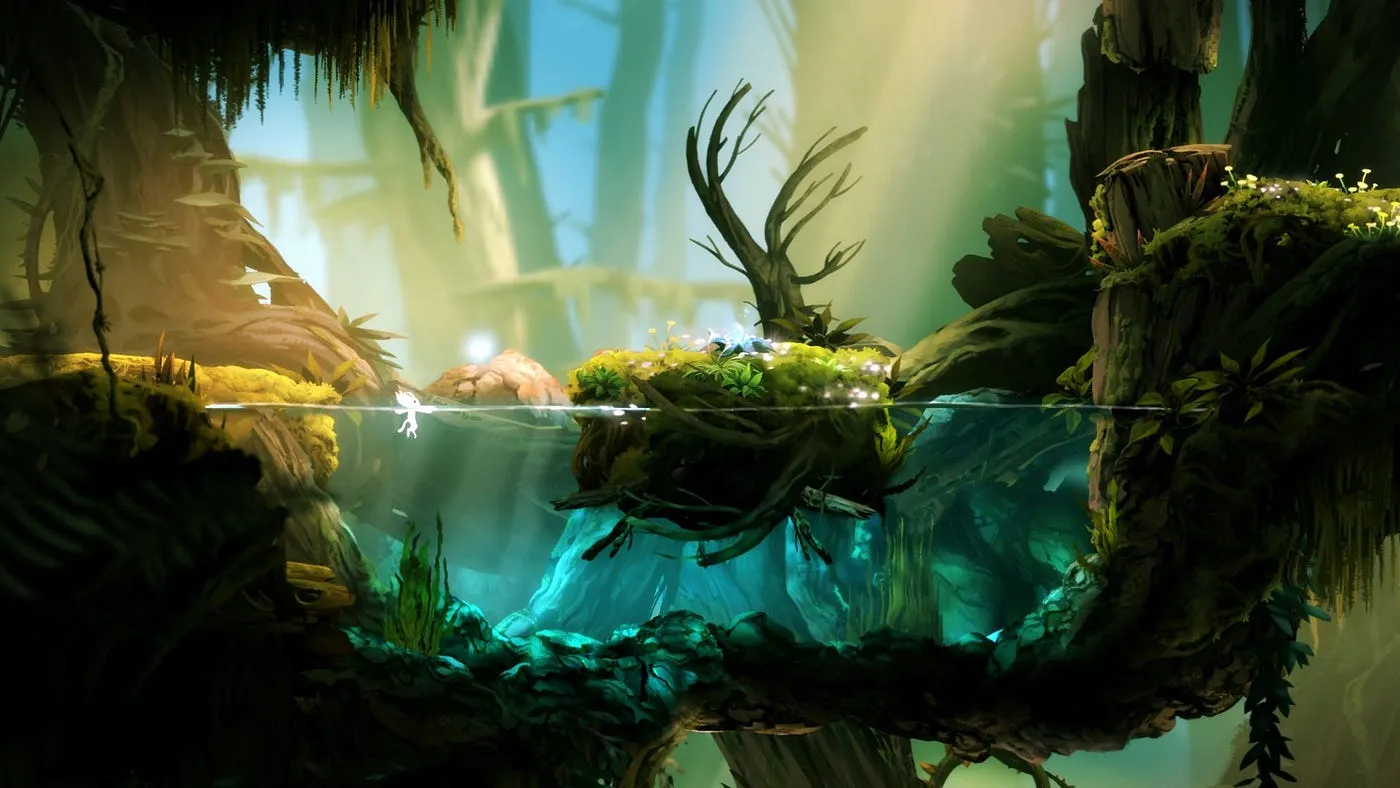
Ori and the Blind Forest Steam Link Here
And one thing that I know many people are fans of and I hated was the save system. I’ve seen multiple videos nealing to this mechanic as something extremely original and clever, but to be completely honest, I really disliked it. I never felt the feeling of spending a resource for saving the game, since that resource was almost infinite throughout the whole game. The only thing that actually happened was me forgetting to save and dying to discover that my last save was 15 minutes ago. It felt like when a software crashes and you didn’t Ctrl+S. Maybe if the resource was more rare and important I would manage it with more cautiousness, but all the moments that I felt the weight of the system was because I forgot about it, not because I was holding the resources smartly.
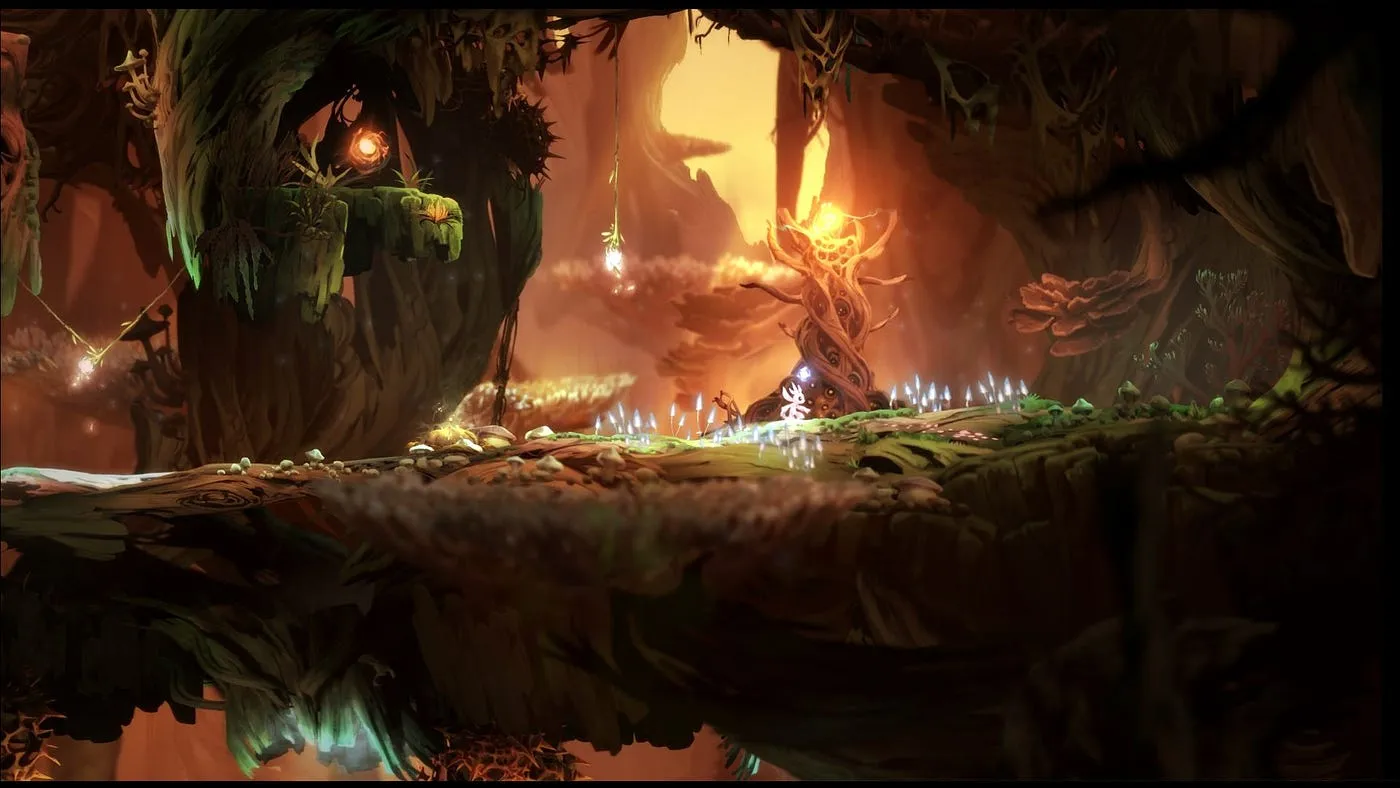
I’m still going to play the second game of the franchise, my feeling is that it is a game with a lot of potential and they really nailed the movement, which is a huge achievement for a game like this. I still recommend the first one, maybe I’m just salty because of my high expectations.
Super Mario™ 3D World + Bowser’s Fury
Bowser Fury is the new addition to the already released “Super Mario 3D World” game that was released in 2013 for Wii U. Basically they released that game on Switch and added this extra bit called Bowser Fury, which is a short 2~3h content that smells like a DLC.
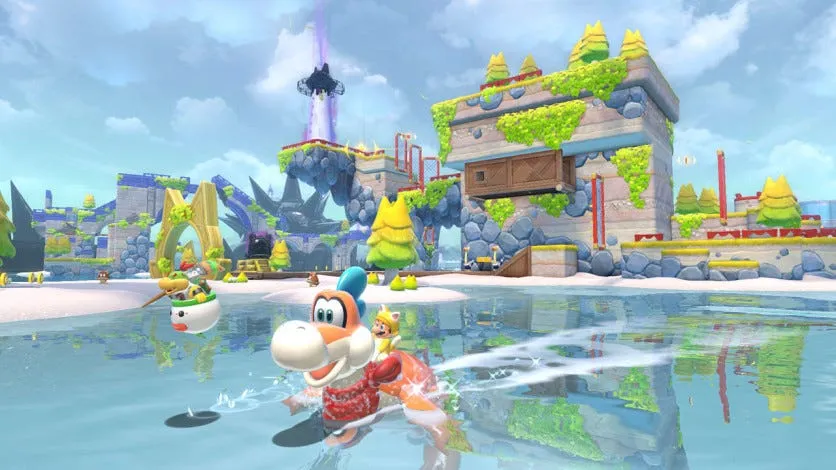
Super Mario™ 3D World + Bowser’s Fury Nintendo E-shop Page Here
The main difference on Bowser Fury is that they took the almost open-world design from Mario Odyssey and expanded it to be much more like a Zelda Wind Waker design, where the player transversed between interesting areas full of platforming challenges to beat and have fun. I have only one critique which is related to Bowser’s role in this expansion.
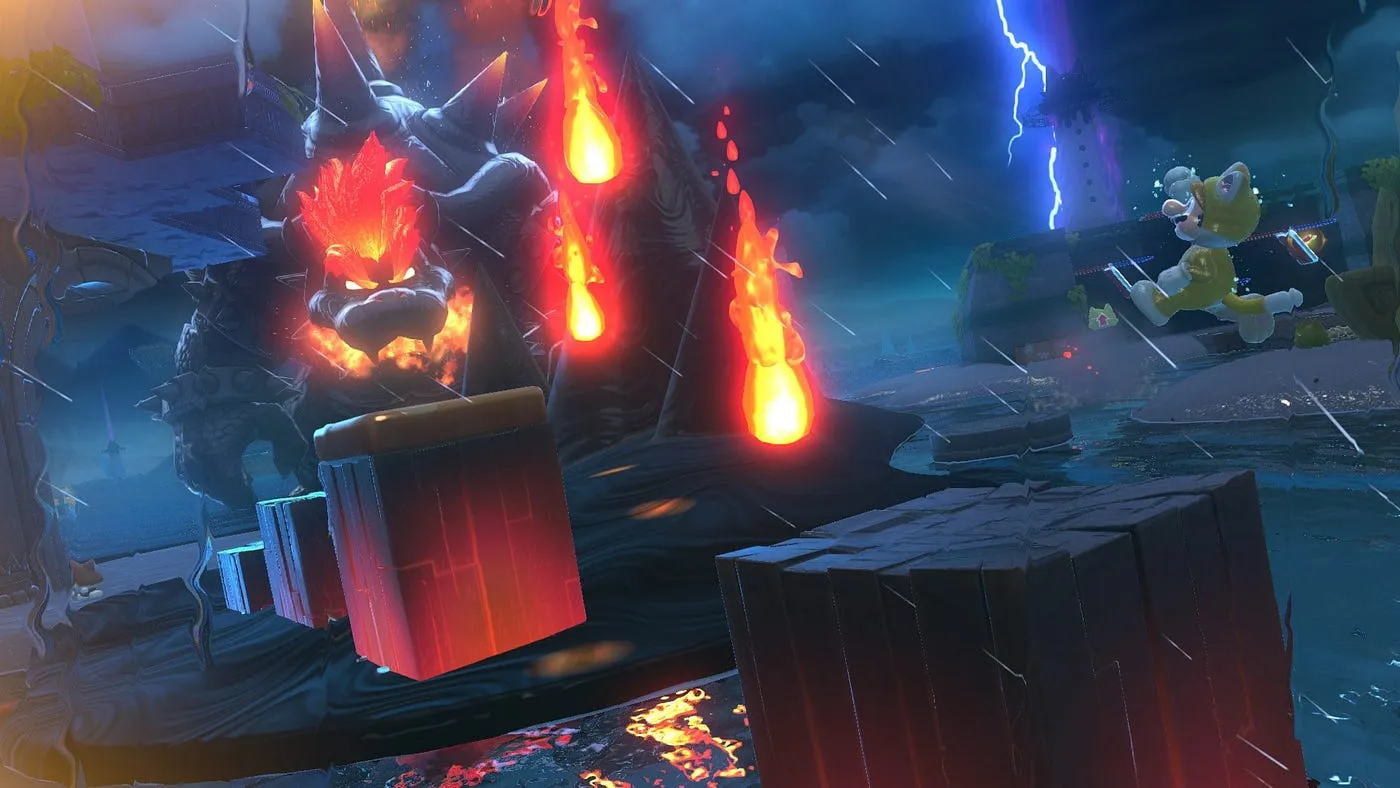
Basically what bowser do is, from time to time, he spawns at the center of the map and changes the whole level design. New platforms will fall from the sky and bowser spit some fireballs and other hazards at you. Although the idea is very interesting, I do think bowser tends to be really repetitive during this mode. Not only repetitive but sometimes frustrating when you are almost beating a challenge and you need to stop to deal with him.
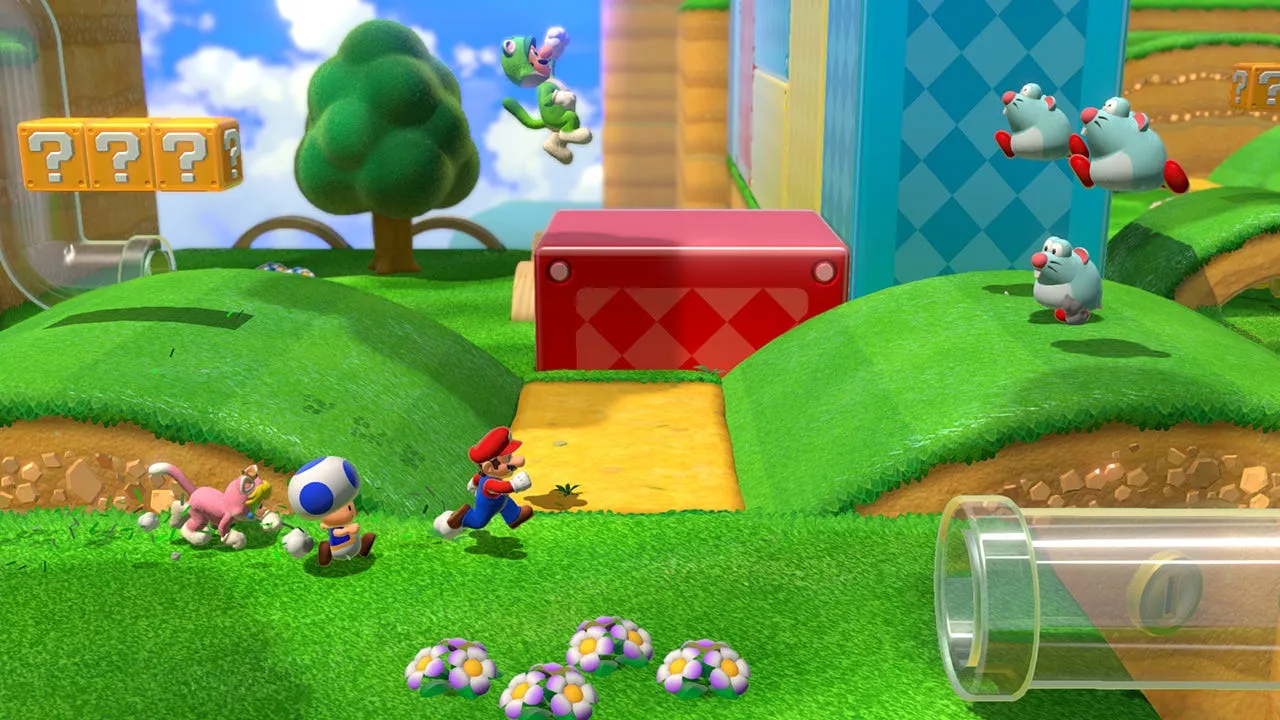
That being said, Super Mario 3D World is already a giant and incredible game that can be played with 4 players, with a never-ending number of stages, each one contemplating a brilliant level design work. Bowser Fury just adds more to the bucket and makes the game a must-have for anyone who didn’t play on Wii U. Highly recommended and I’m excited to see what Nintendo will do next after this little experiment.
QOMP
QOMP is a short game created by this guy here. It’s a very mechanical game that spins around a twist on the control scheme. All mechanics are very creative and the Level Design is very very smart, an amazing reference for small projects.
It was an incredible surprise and a delight to play. Also, it’s a very cheap and short game that can be fit into anyone’s backlog, so I highly recommend it!
QOMP Steam Link Here
My Exercise
A game from the same people who developed “Kids” and “Plug & Play” will always draw my attention. This is the kind of artistic and bizarre experience that I always prepared to spend money on. My exercise is a game that can be “beaten” in 10 minutes, and it’s much more a visual experience than a game per see. There’s no lose condition, no challenges, just small bits of interaction. I’ll not take your time explaining a 10 minutes game, but I always recommend this kind of experience to anyone more eclectic.
Rub ya face on the dog while doing abs. My Exercise Steam Link Here
Cuphead
I’ve played Cuphead right at its launch and for some reason, I’ve disliked it. I don’t know, something related to Contra’s style of game design, or even the size of the character on the screen was kinda weird for me. I don’t know why, but I’ve stopped playing it. This year I installed it again and finished it in 3 days. I don’t have much to say, the game is gorgeous, the gameplay is on point, the bosses are very creative and for anyone that likes to repeat the same patterns until you master, much like any From Software game, this game is very cool to play. Currently waiting for their DLC!
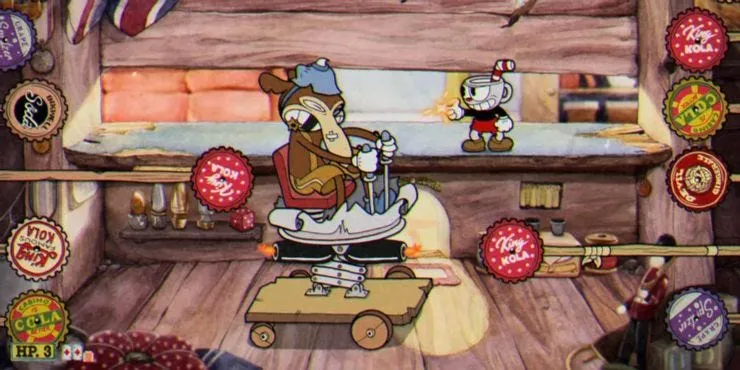
This rat fellow was certainly my favorite boss, besides being a very creative fight, there’s a whole quick plot going on. Feels very cartoony. Cuphead Steam Link Here
Conclusion
I think that’s it everyone! I’m planning to keep writing these half-year reviews to keep pushing myself to play, to exercise my writing skills, and to keep track of the games that I’m playing, eventually, I will have many years of data-track on the things that I’ve played (and how I felt about each of them at the time). So, see you later (maybe around February?). XOXO